• Facebook
  • Twitter
  • Instagram
  • Labor Center
  • Labor Studies
  • LOSH
  • HARRT
Give Now
Institute for Research on Labor and Employment
  • About
    • IRLE History
    • IRLE Director
      • Director Messages
    • Institute Staff
    • Administration
    • Jobs and Internships
  • IRLE 80th
    • 80th Main Page
    • IRLE Timeline
    • 80th Events
  • Events
    • Upcoming Events
    • UCLA Strategic Labor Research Conference
  • Research
    • Publications
    • State of the Unions
    • UCLA Strategic Research Lab
    • Entertainment and Media Research Initiative
    • Memory Work Research Initiative
    • Transnational Gender and Labor Working Group
    • Visiting Scholars
    • Affiliated Research Centers
  • News
    • IRLE News
    • Weekly Labor Reads
    • IRLE Quarterly
    • In the Headlines
    • IRLE Media Kit
    • IRLE Experts
  • Contact
  • Search
  • Menu Menu

Before the Institute: 1920-1946

The origins of the UCLA Institute for Research on Labor and Employment (IRLE) reach back to the 1920s when researchers and workers came together to study the problems of modern industry, train the leaders of new unions and broaden the scope of public higher education. 

In 1921, the University of California launched a “workers’ education” extension program comprised of one staff member who taught workshops across the state. The small UC program was part of an international movement to empower workers through education at a time when very few working people attended college, and only a minority finished high school. In the early 1920s, progressive educators and union activists launched labor colleges in New York, Pennsylvania, Wisconsin and other eastern states, while the American Federation of Labor (AFL) created a Workers’ Education Bureau to coordinate curriculum. At the same time, socialists, communists and various religious denominations offered educational programming geared toward working people.  

During the Great Depression, interest in workers’ education grew due to mass unemployment, renewed interest in unionization and federal funding for adult education under the New Deal. In Los Angeles, a group of women garment workers who had attended labor colleges in the East and Midwest set out to establish a labor college on the West Coast. Among them was Sadie Goodman, a garment worker and experienced organizer with the Amalgamated Clothing Workers of America. In 1933, Goodman and her collaborators organized a summer training program at Occidental College in Los Angeles in partnership with state education officials and UC Extension. This first Western Summer School for Industrial Workers grew into a year-round program that trained hundreds of union leaders, later known as the Pacific Coast Labor School.

The growing power of labor unions in the 1930s and the nascent workers’ education movement drew researchers like UCLA economists Paul Dodd and Gordon Watkins into deeper engagement with questions of industrial policy. Landmark legislation like the National Labor Relations Act formalized workers’ right to establish unions and bargain collectively, while the Fair Labor Standards Act established the 40-hour workweek and the right to overtime pay. From 1933 to 1941, union membership soared from less than 3 million to nearly 8.5 million workers. Dodd and Watkins co-authored a textbook on labor problems while Dodd led major research projects on health insurance, the aviation industry and the film industry.

During World War II, Dodd took leave from UCLA to serve on the War Labor Board, where he arbitrated major disputes between unions and employers on the West Coast. In February 1944, Dodd wrote to UC president Robert Sproul about the establishment of the New York State School of Industrial Relations, which he felt the University of California should emulate. Sproul and Dodd then organized a meeting with California’s Republican governor Earl Warren, who was courting the votes of union members, and pitched the idea of a state-funded labor research program at UCLA. Warren backed the idea, which quickly expanded to the Berkeley campus, and included it in his 1945 budget request. Sproul selected Dodd to lead the faculty planning committee for the new Institute of Industrial Relations (IIR), and Dodd became the director of the UCLA IIR when it launched in 1946. Dodd recommended the young economist Clark Kerr to be the IIR director at Berkeley.

  • 1919

    University of California campus established in Los Angeles

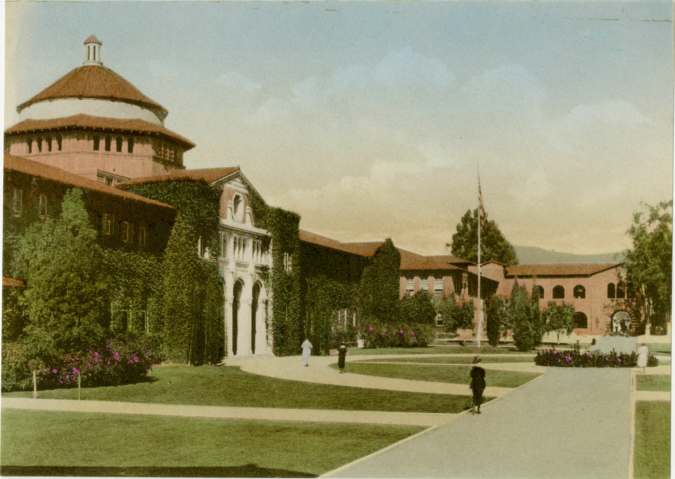
    Colorized photograph of Vermont Ave campus scene, ca. 1920

    Colorized photograph of Vermont Ave campus scene, ca. 1920 / UCLA Library Special Collections

    The University of California, founded in 1868, established a “Southern Branch” in Los Angeles in May, 1919 on Vermont Ave. The original campus was the former site of the Branch State Normal School and is the current site of Los Angeles City College. The Southern Branch was renamed University of California, Los Angeles in 1927 and relocated to its present location in Westwood in 1929. 

  • 1921

    The University of California’s Workers’ Education extension program established

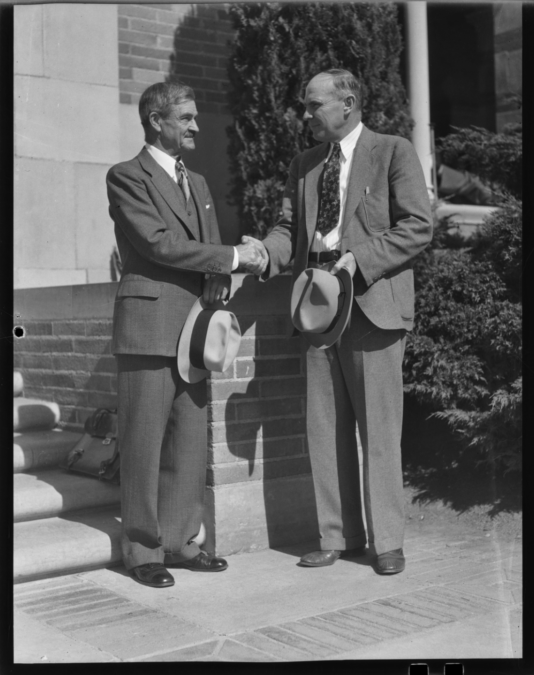
    Director of the University Extension at UC Berkeley, Leon J. Richardson, visits the UCLA campus.

    Director of the University Extension at UC Berkeley, Leon J. Richardson, visits the UCLA campus. / UCLA Library Special Collections

    In 1921, the head of the UC Extension program hired an Oakland school teacher, John L. Kerchen, to travel to union halls and worker centers across the state to teach courses on economics and labor history to working people. The courses mainly had vocational topics in the early years, but shifted to a focus on labor relations and organizing by the late 1920s.

    1921

  • 1930

    UCLA and the Great Depression

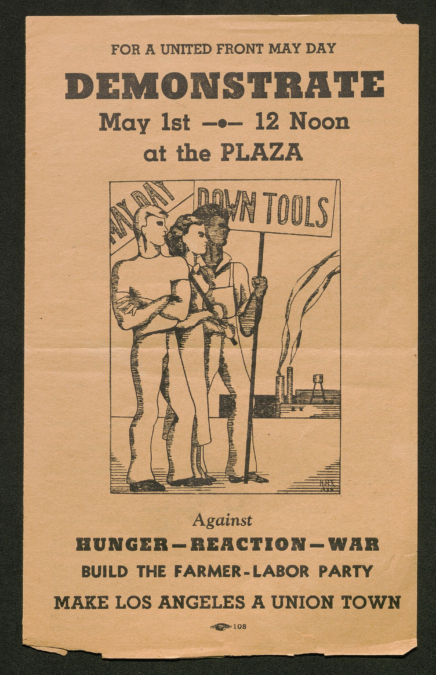
    Flyer for May Day demonstration with the slogan “Make Los Angeles a Union Town” c. 1930s, Student Activism Collection, UCLA Library Special Collections

    Flyer for May Day demonstration with the slogan “Make Los Angeles a Union Town” c. 1930s, Student Activism Collection, UCLA Library Special Collections

    In the politically and economically tumultuous decade of the 1930s, faculty across the University of California engaged with questions of inequality and public policy while students protested the rise of fascism at home and abroad. UCLA economist Paul Dodd led an extensive research project on health care in California and called for state-supported health insurance.

  • 1933

    The first “Western Summer School for Industrial Workers” organized in partnership with UC Extension

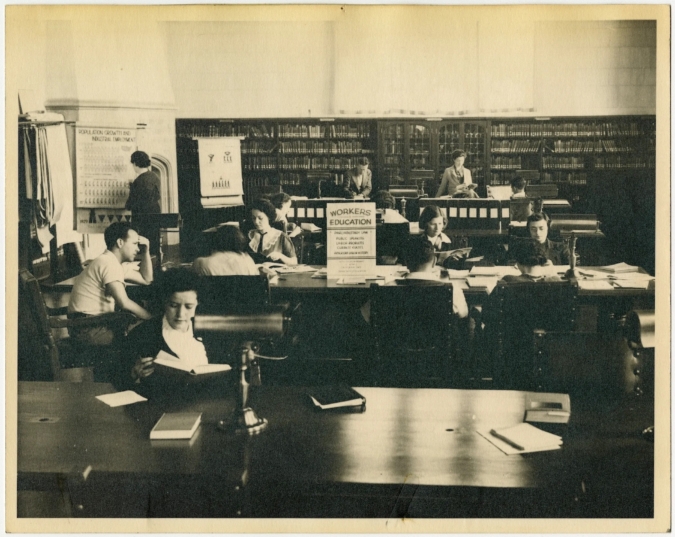
    Students participate in a later iteration of the UC Extension operated workers education program, c. 1938. / Occidental College Library, Occidental College

    Students participate in a later iteration of the UC Extension operated workers education program, c. 1938. / Occidental College Library, Occidental College

    One of the first residential labor colleges on the West Coast, the Western Summer School for Industrial Workers operated under various names between 1933 and 1941, co-sponsored by the UC Extension program. The program educated hundreds of rank-and-file union members in Southern and Northern California in summer sessions featuring courses on a variety of subjects, including labor economics, class consciousness, European social movements, English and dramatic arts. Many students benefited directly from the skills and knowledge they gained in the programs and went on to assume leadership roles in their organizations. 

    1933

  • 1935

    Landmark labor legislation paves way for organizing boom

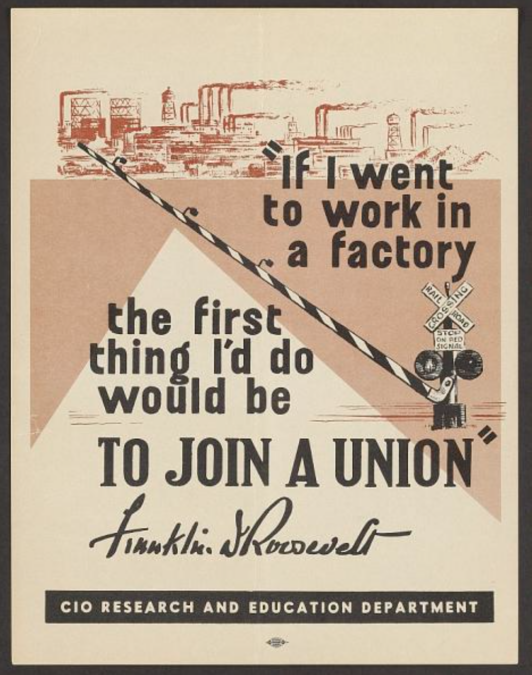
    CIO organizing poster, circa 1935. National Archives.

    CIO organizing poster, circa 1935 / National Archives

    In the 1930s, Congress passed monumental labor legislation that paved the way for a new era of workplace regulation and union organizing. In 1935, the National Labor Relations Act (NLRA) protected workers’ rights to bargain collectively, engage in strikes and other worksite actions and pursue remediation after employer retaliation. In 1938, the Fair Labor Standards Act (FLSA) established foundational labor rights, including minimum wage, overtime pay and prohibitions on child labor.

  • 1935

    Labor Summer school moves to UC Berkeley campus

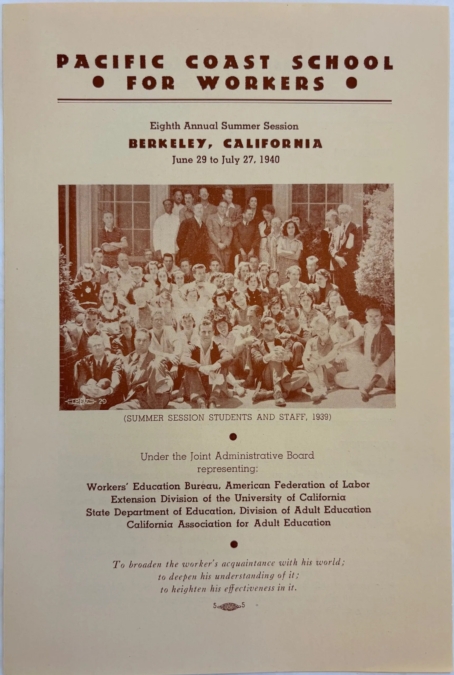
    A brochure for the labor summer school, renamed the Pacific Coast School for Workers, at UC Berkeley, c. 1940 / University of California Extension records, Bancroft Library

    A brochure for the labor summer school, renamed the Pacific Coast School for Workers, at UC Berkeley, c. 1940 / University of California Extension records, Bancroft Library

    In its early years, the UC-sponsored worker education summer program faced criticism due to the left-leaning politics of its student body. Program administrators made careful appeals to UC leaders to continue their sponsorship, emphasizing the value of exposure to a university education for industrial workers. UC President Sproul agreed to move the summer program from Occidental to Berkeley in 1935. That year, about 90 workers participated in the summer school and completed coursework on labor, economics and dramatic arts.

    1935

  • 1941

    U.S. union membership soars

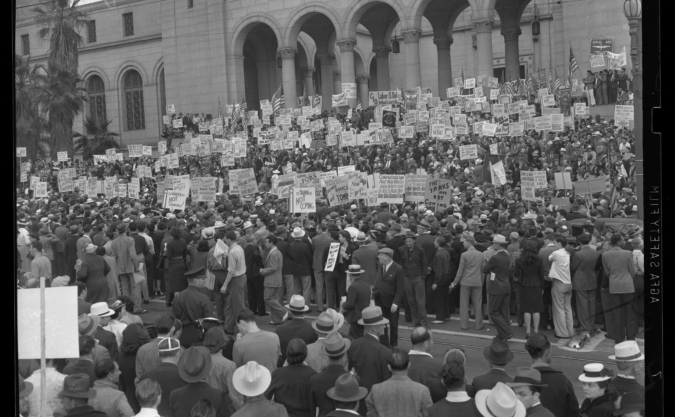
    CIO-organized anti-war demonstration outside Los Angeles City Hall, c. 1940 / UCLA Library Special Collections

    CIO-organized anti-war demonstration outside Los Angeles City Hall, c. 1940 / UCLA Library Special Collections

    Union membership rates in the U.S. surged from less than 3 million union members in 1933 to nearly 8.5 million in 1941 as a result of workplace protections afforded by the NLRA and FLSA. World War II inspired a wave of organizing and demonstrations across the country. In Los Angeles, union membership increased from 45,000 in 1935 to 250,000 by 1943. 

  • 1946

    Institute for Industrial Relations established

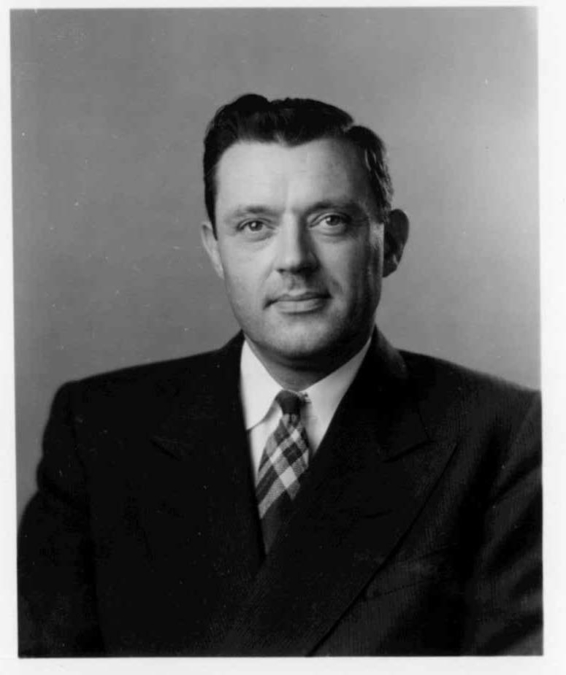
    Black and white photograph of UCLA Economics Professor and Founding Director of the IIR Paul Dodd (1946-1949).

    UCLA Economics Professor and Founding Director of the IIR Paul Dodd (1946-1949). / Paul Albert Dodd Papers (Collection 541). UCLA Library Special Collections

    By the end of World War II, working people and their organizations had transformed the United States. Unionized workers now negotiated their pay and working conditions with some of the largest corporations in the world. They also became a force in the corridors of power in Washington, as well as Sacramento. The creation of the Institute for Industrial Relations–the precursor to what is today the IRLE–underscored the need for new forms of economic and policy knowledge that reflected these monumental changes. 

    1946

Next time period: 1947-1960

Related Sites

  • Give Now
  • College of Letters & Science
  • Social Sciences Division
  • LA Social Science

Campus Resources

  • Maps, Directions, Parking
  • Directory
  • Contact
  • Academic Calendar
  • Careers
  • Diversity
  • University of California
  • Terms of Use
© Copyright 2019 - UCLA Social Sciences Computing
Scroll to top