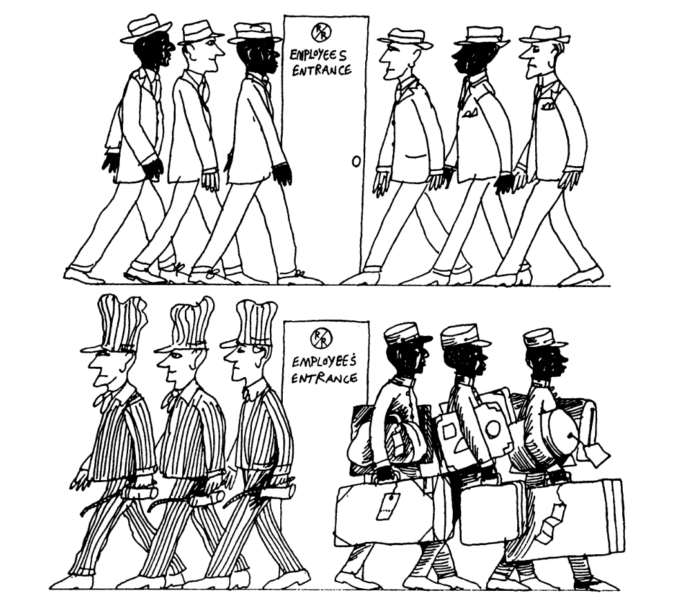
The expansion of Southern California’s industrial economy in the mid-twentieth century created thousands of good, union jobs in the region, but not everyone shared equally in the prosperity. Black, Latine, Asian and women workers continued to experience workplace segregation, although many forms of discrimination became illegal in these years. And while industrial relations experts at the Institute championed the still-new system of collective bargaining, not all employers were eager to embrace unions. Access to college expanded rapidly, while UCLA’s enrollment and course offerings grew and diversified. True to its original purpose, the Institute’s research in these years informed public policy and grappled with complex new challenges.
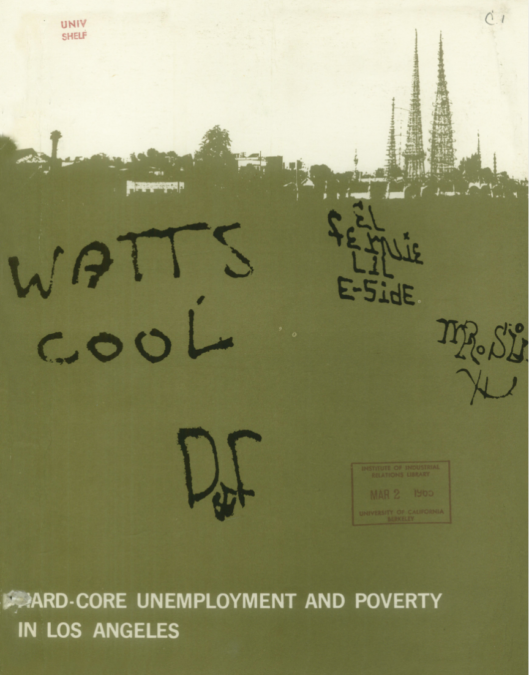
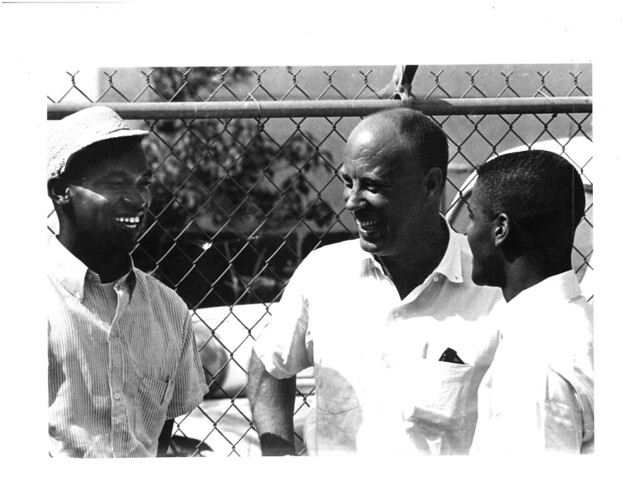
The emergence of the Civil Rights Movement and widespread activism in the 1960s ushered in an era of social change and increased awareness of pervasive inequality and discrimination, including at work. Researchers at the IIR developed a robust program of community-engaged research, interviewing but also collaborating with working people, especially young people of color in South Central and Eastside neighborhoods wracked by segregation, high unemployment and under-funded schools. Labor economist Paul Bullock typified this line of inquiry with the people of Watts and Northeast LA, not as research subjects, but as collaborators in pioneering studies of black market labor and advocacy for full employment policies. Along with economist Robert Singleton, then a graduate student and NAACP activist, Bullock published a comprehensive study of unemployment on the eve of the Watts Uprising, Hard-Core Unemployment and Poverty in Los Angeles. Bullock and his collaborators later published a study of young workers in Watts and East Los Angeles, and in 1973 he organized a national conference to set forth a Full Employment agenda.
In 1964, the Center for Labor Research and Education, now the UCLA Labor Center, was established by a statewide joint labor-university committee. Authors of the new center’s guidelines highlighted key issues of the day deserving of labor-university collaboration: job displacement, the needs of white-collar unions, reducing hours of work and the problems of the unemployed. The Watts Uprising the following year would further galvanize a research agenda focused on the conditions and concerns of those left behind by postwar economic growth.
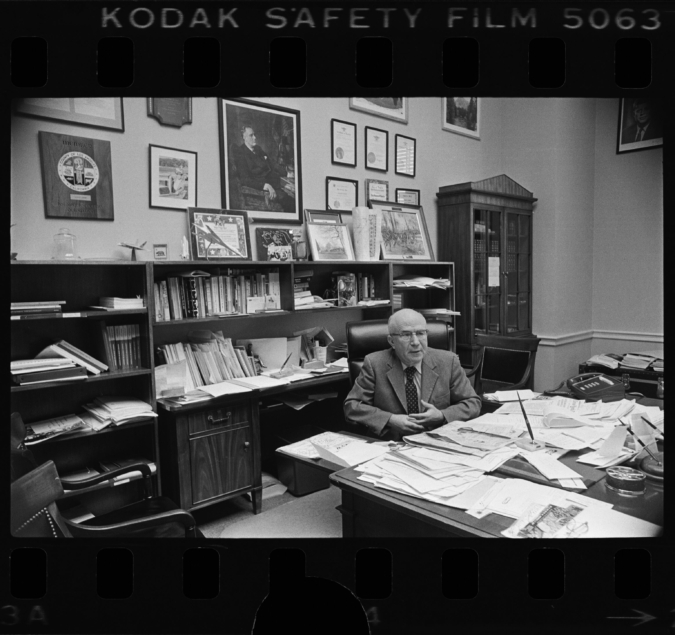
The IIR’s director in these years was Benjamin Aaron, a legal scholar and arbitrator who served on many national, state and local policy advisory boards. Aaron became interested in labor issues during his college years at the University of Michigan while the Congress of Industrial Organizations (CIO) swept through industries in nearby Detroit. As he noted in his memoir, “my sympathies were strongly for organized labor.” His first job after graduating from Harvard University’s law school was with the War Labor Board, mediating industrial conflicts in the auto industry. He later served on the Wage Stabilization Board during the 1950s and a national commission on automation during the 1960s. Aaron advised California Governor Pat Brown, Los Angeles Mayor Tom Bradley and the state legislature on public employee labor relations, contributing to the current legal framework for public sector workers in the state.