
Higher wages, heat safety and an equal voice: How workers won in 2024
New “State of the Unions” report uncovers key victories for workers in fast-food, warehousing and agriculture industries
Willa Needham | August 28, 2025
This weekend, Labor Day invites us to reflect on the achievements of working people. At a time when emerging federal policies threaten labor protections for millions of Americans, it is especially important to highlight how workers are defending their rights.
A new report from the UCLA Institute for Research on Labor and Employment (IRLE), the UC Berkeley Labor Center and the Inland Empire Labor and Community Center at UC Riverside (IELCC), reveals how workers won in key industries in 2024. The “State of the Unions: California Labor in 2024” report features three case studies that bring readers inside notable campaigns led by workers in fast-food, warehousing and agriculture.
Taken together, the case studies reveal that California legislation plays a crucial role in ensuring workers’ rights. As challenges mount for working people in 2025, worker victories at the state level provide a roadmap for continuing the fight.
“The states have long been seen as ‘laboratories of democracy’ where new ideas can be tested and refined,” said Toby Higbie, Director of the UCLA IRLE and labor historian. “Given California’s large and vibrant economy, we have an opportunity to try new approaches to workplace challenges that could be adopted by other states.”
Read on to discover winning strategies for fast-food, warehouse and agricultural workers in California.
Fast-food workers increased wages and gained representation
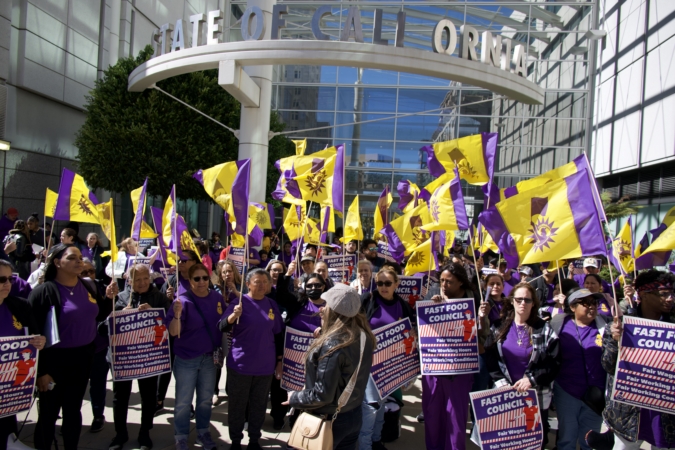
The first case study, authored by the UC Berkeley Labor Center, details how fast-food workers built power and won a $20 minimum wage in 2024. Workers gained substantial wage increases by successfully passing AB 1228, a state bill that boosted pay for workers at fast-food franchises with 60 or more locations nationwide. The new baseline minimum wage of $20 was the largest minimum wage increase in US history.
The bill also established the Fast Food Council under the California Department of Industrial Relations. Fast-food workers make up the body of the council alongside legislators and fast-food business interests. For the first time, fast-food workers have an equal voice with employers and legislators in proposing and developing industry-wide labor standards.
The case study demonstrates that organizing by sector can be an effective strategy to improve conditions in franchised, fissured industries. Rather than targeting individual fast-food workplaces, the campaign made gains for workers in the industry as a whole by passing a bill that applied to the sector.
The fast-food workers’ fight also underscores the importance of organizing beyond legislative campaigns. In 2024 fast-food workers deepened solidarity by forming a minority union with SEIU. Workers in the minority union initiated over 40 strikes, organized Know Your Rights trainings and pushed for improved work scheduling protections.
Warehouse workers strengthened safety standards
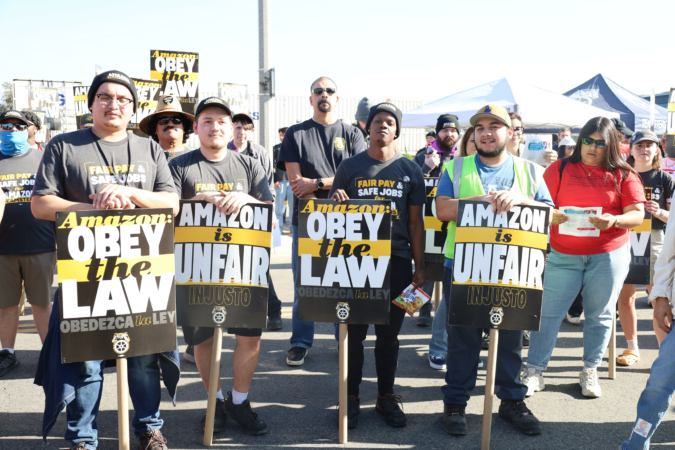
The next case study from the Inland Empire Labor and Community Center at UC Riverside (IELCC) recounts how warehouse workers in the Inland Empire won improved heat safety regulations and more through their partnership with worker centers and unions.
In early 2024, workers at Amazon’s largest air cargo hub on the West Coast teamed up with the Warehouse Workers Resource Center (WWRC) to file a lawsuit against Amazon. The case complained that Amazon had failed to implement heat illness prevention measures for outdoor workers. The California Division of Occupational Safety and Health (Cal/OSHA) ruled in favor of the workers after finding that Amazon did not provide access to sufficient shade and water during periods of high heat. The goliath company was fined over $14,000 by the state and required to implement corrected standards at the facility.
The warehouse workers also partnered with the WWRC to establish stronger regulations for heat safety under California’s Occupational Safety and Health Standards Board. The new standards require employers to provide cooling areas for workers when temperatures reach 82 degrees Fahrenheit and take additional protective measures at 87 degrees.
In addition to fighting for state policies, Amazon workers at the air cargo hub launched a unionization drive with the Teamsters in late 2024. By December, a majority of workers had signed union authorization cards, but Amazon refused to recognize the union. Workers responded with collective action, initiating walkouts and a holiday strike that garnered national attention. The warehouse workers won increased wages, safer conditions and other workplace improvements through their efforts, supported by the Teamsters and the WWRC.
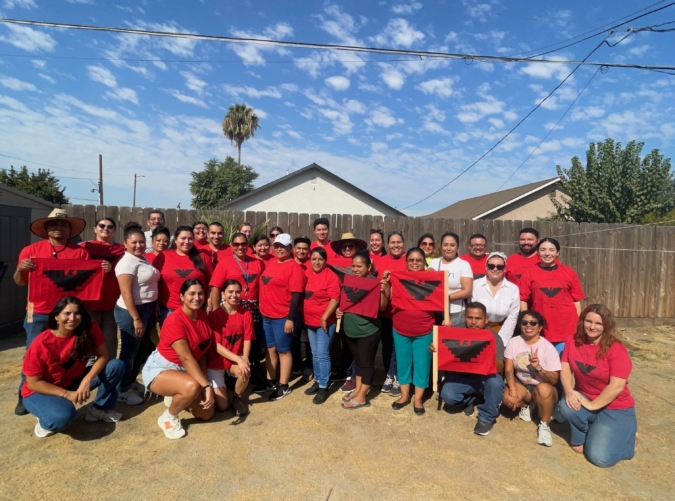
Farmworkers organized and sought protection from deportation
The final case study, authored by the UCLA IRLE, highlights how farmworkers built power in 2024. Farmworkers filed for union recognition at a markedly increased rate from previous years using an expedited majority sign-up process made possible by a 2022 California bill. In 2024 alone, the United Farmworkers of America (UFW) filed more union petitions than they had in the past decade. The UFW filed four petitions for new unions with the California Agricultural Labor Relations Board, seeking to represent 1,200 farmworkers at locations across California.
Immigrant farmworkers also sought protections with assistance from the UFW and CalOSHA through a Biden-era initiative called the Deferred Action for Labor Enforcement (DALE) program. The DALE program allows undocumented workers who experienced labor violations to be protected from deportation and employer retaliation while participating in a workplace investigation.
In 2024, the UFW organized a series of DALE clinics in Bakersfield in partnership with the National Immigration Law Center (NILC) and several other organizations. With the assistance of NILC attorneys and dozens of volunteers, hundreds of farmworkers successfully completed the DALE application process and were granted work permits for two to four years.
Learn more
The UCLA Institute for Research on Labor and Employment (IRLE) advances labor research and education for workplace justice. Through the work of its units – the UCLA Labor Center, the Labor Occupational Safety and Health program (LOSH), the Strategic Research Lab, the Human Resources Roundtable, and its academic program, UCLA Labor Studies – the Institute forms wide-ranging research agendas that carry UCLA into the Los Angeles community and beyond.