
L.A. labor leaders link the past and future during visit to UCLA campus
David Huerta, SEIU-USWW president, explored labor history archives before joining Flor Melendrez, CLEAN Carwash Worker Center director, for a panel on worker organizing in a UCLA Labor Studies class
Willa Needham | October 30, 2025
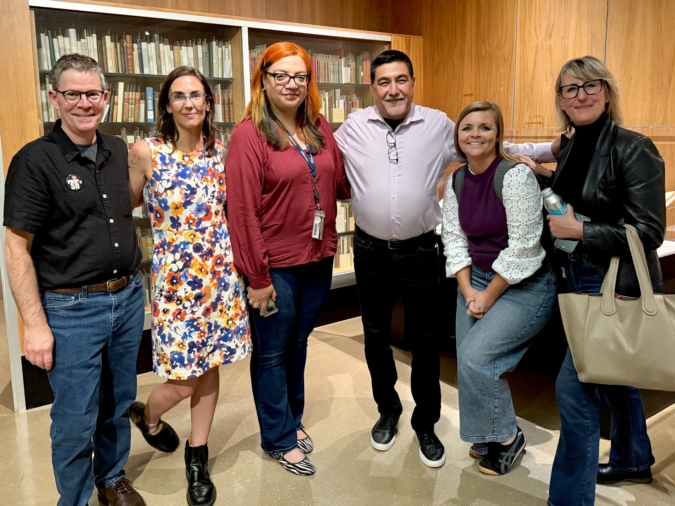
Earlier this month, prominent Los Angeles labor leaders joined the UCLA Department of Labor Studies for a visit to the archives and a classroom panel discussion. The Labor Studies Department partnered with UCLA Library to present records from SEIU-USWW to David Huerta, current president of the union. Then, Huerta joined a panel on worker organizing in a Labor Studies 10 class with Flor Melendrez, CLEAN Carwash Worker Center director.
Revisiting movement strategy in the archive
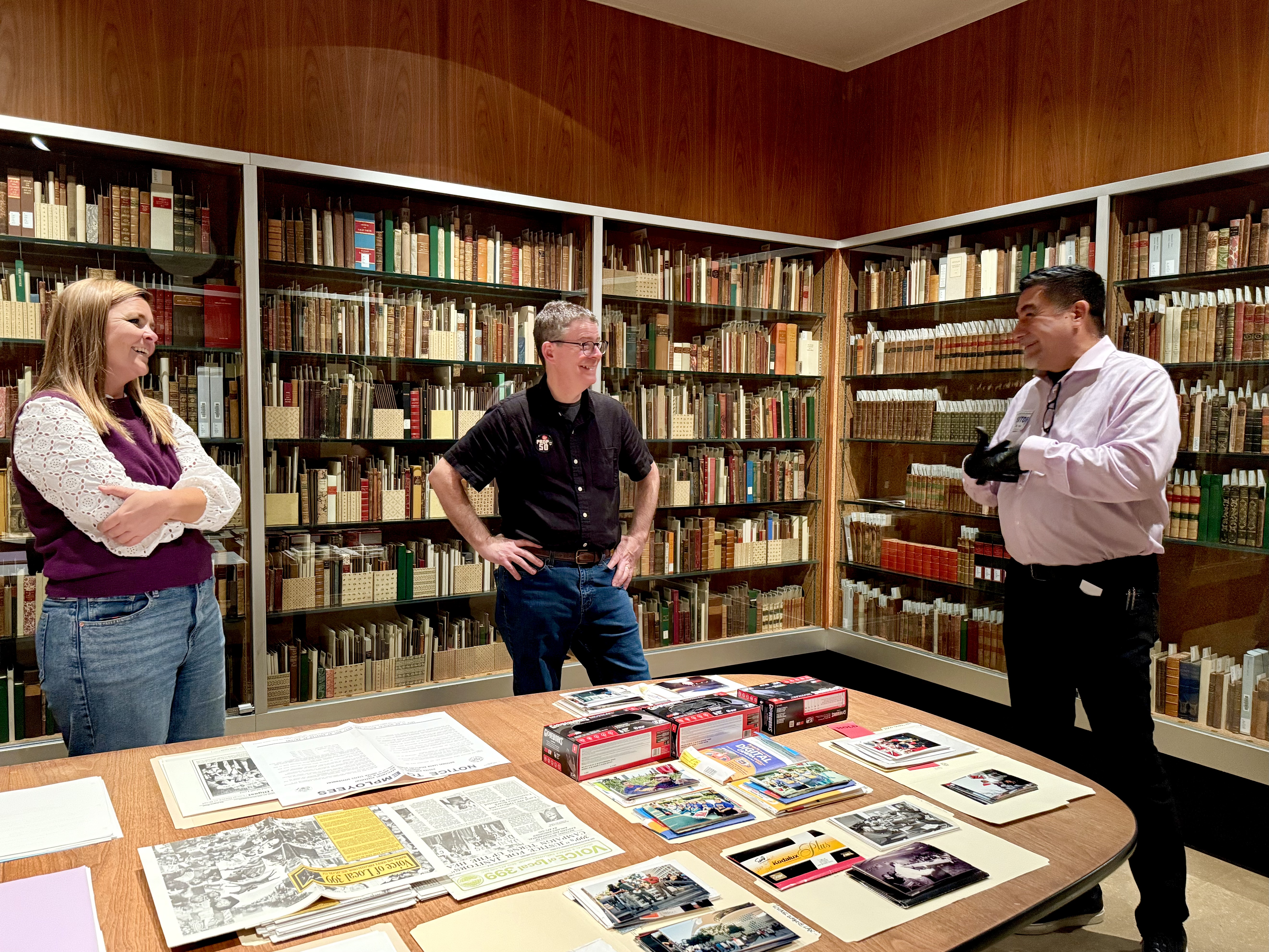
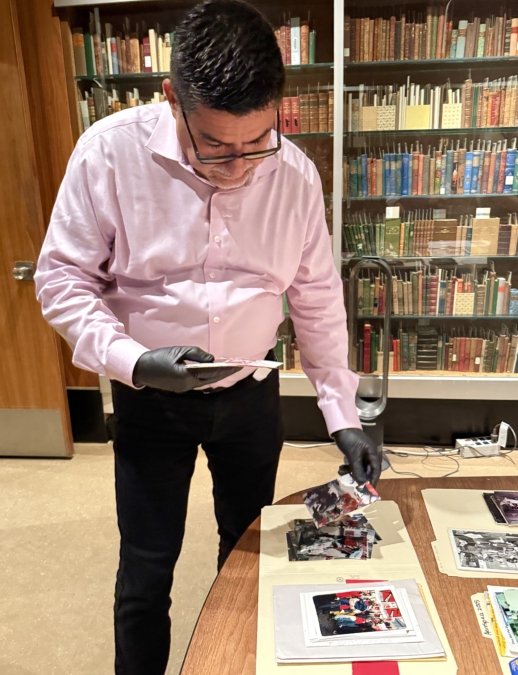
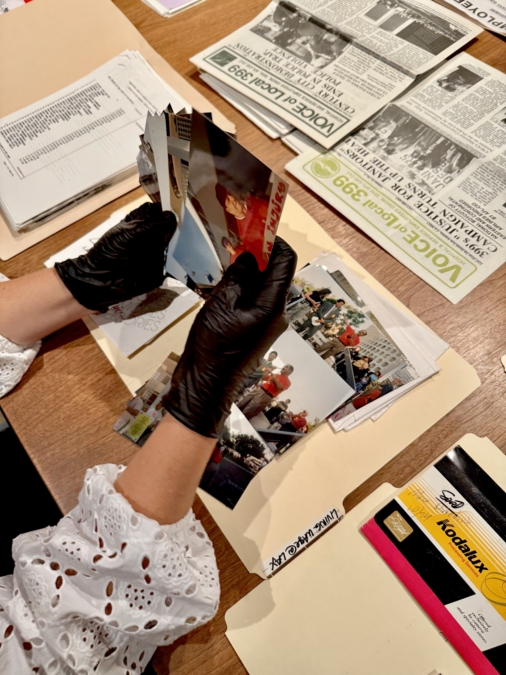
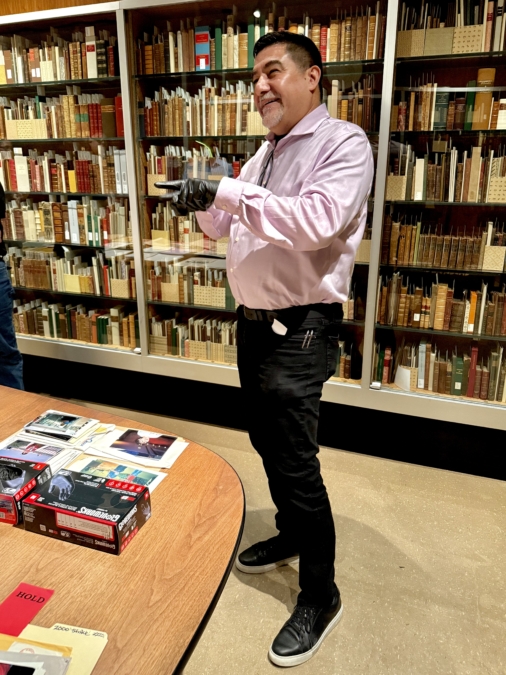
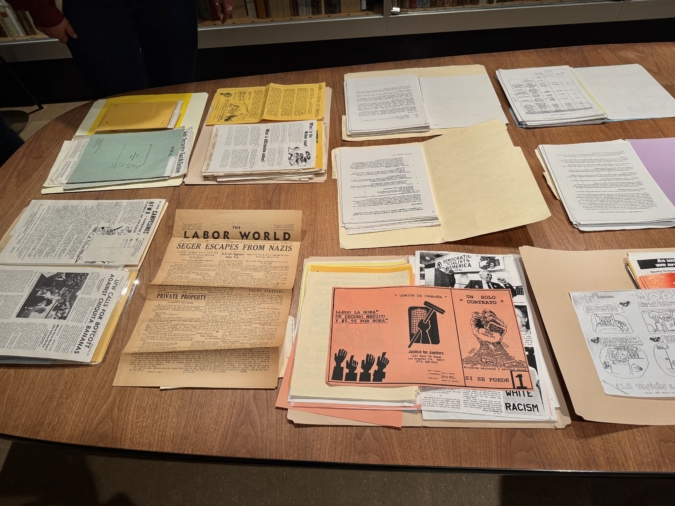
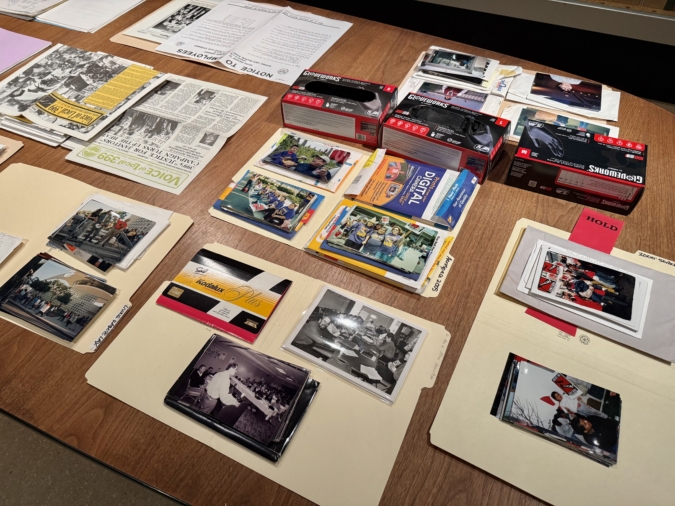
Staff and faculty from the UCLA Institute for Research on Labor and Employment (IRLE), Labor Studies and UCLA Library accompanied SEIU-USWW president David Huerta to UCLA Library Special Collections, where they had the opportunity to view curated materials from the Service Employees International Union-United Service Workers West (SEIU-USWW), circa 1935-2000 Collection. Huerta, who joined SEIU in the 1990s during the “Justice for Janitors” campaign, reflected on his early career as an organizer while he sorted through photographs, flyers and documents from actions he was involved with.
The collection documents how immigrant workers and new leaders revitalized the labor movement in Los Angeles in the late 20th century. Huerta was among a generation of leaders and organizers who empowered immigrant workers, many of whom had recently arrived from Central America, to build collective power and improve their exploitative working conditions.
Justice for Janitors used strategies of civil disobedience and targeted research that had fallen out of favor in the labor movement of the 1980s. The campaign was met with harsh pushback from corporate employers and the police, most infamously during a 1990 strike in Century City. Justice for Janitors ultimately gained public support and resulted in better contracts for thousands of building service workers. During his visit to the archive, Huerta recalled his role in a consequential janitor’s strike in the spring of 2000 that threatened to disrupt the NBA finals before a last-minute settlement.
Addressing the next generation of activists
More than 35 years later, the struggle to secure dignity and respect for working families in Los Angeles continues. The federal agenda against immigrant families and ongoing workplace raids in Los Angeles and across the country have created an especially tense situation. Huerta, in fact, was arrested by federal immigration officers this summer while he was observing an immigration raid in the garment district.
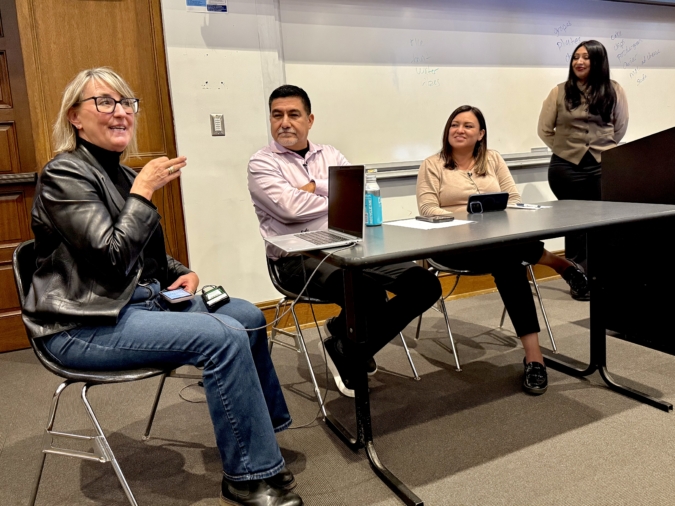
After the archive visit, Huerta spoke about his experiences as an organizer on a panel in a UCLA Labor Studies class. He shared what keeps him motivated through hardships with the next generation of activists in the audience: “We have to make sure that we continue to remind ourselves that the fight that we have is just not about democracy, but it’s also about how we protect working people at this moment in time, because your status should not define whether you have justice or not.”
The panel was in an introductory Labor Studies 10 seminar, taught this quarter by Professor Rosemarie Molina. Also on the panel was Flor Melendrez, executive director of the CLEAN Carwash Worker Center, who has been deeply involved in crisis response this year as members of her organization have been targeted by federal immigration enforcement.
Janna Shadduck Hernandez, UCLA Labor Studies lecturer, moderated the panel and asked the organizers to provide insights into how they are approaching the current moment. Melendrez shared the importance of staying grounded in a mission even in chaotic or uncertain times.
“At the core [of CLEAN] is organizing and leadership development,” she said. “And when that’s the core, everything else can shift and change to respond to the moment. Which we have done, and will continue to do.” She explained that the CLEAN Carwash Worker Center strives to uplift the whole identity of workers and improve not just workplaces, but lives and communities, through skill-building training programs.
Students in the audience had the opportunity to ask the labor leaders questions, and many sought advice on how to get involved in organizing and making change in these difficult times. Huerta and Melendrez drew from their personal experiences and the history of justice movements in Los Angeles in their responses.
“This is our Prop 187 moment,” Huerta said, referencing the massive wave of organized protest in Los Angeles in 1994 that occurred after the introduction of a bill that would have restricted civil services for undocumented immigrants and required state workers to report anyone suspected of being undocumented to federal immigration authorities. “This is the moment to organize from the loss that we’ve experienced. Sometimes loss is necessary to realize what you’ve lost and fight like hell to win it back.”
Huerta’s nod to the recent past underscored the importance of studying history for new activists. Melendrez and Huerta both emphasized that tried-and-tested strategies lead to victory. Luckily for UCLA students and members of the general public, labor’s past wins are well documented in the archive at UCLA Library and in the living memory of the experienced leaders still fighting.
The UCLA Department of Labor Studies is the first department of its kind at the University of California. Since its founding in the early 2000s, the academic program has been renowned for its commitment to engaged student learning in community worker settings, rigorous hands-on research and courses that explore urgent labor and social justice issues.