
Behind the scenes at the Port of Los Angeles with UCLA Labor Studies
Students explored North America’s busiest port from multiple perspectives
Willa Needham | November 18, 2025
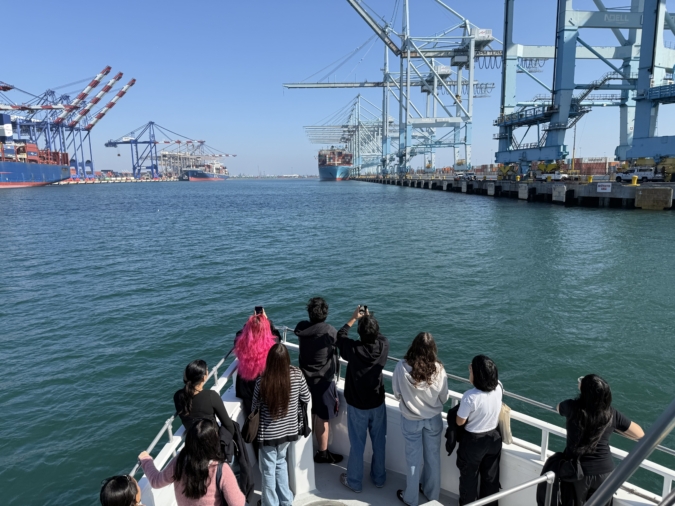
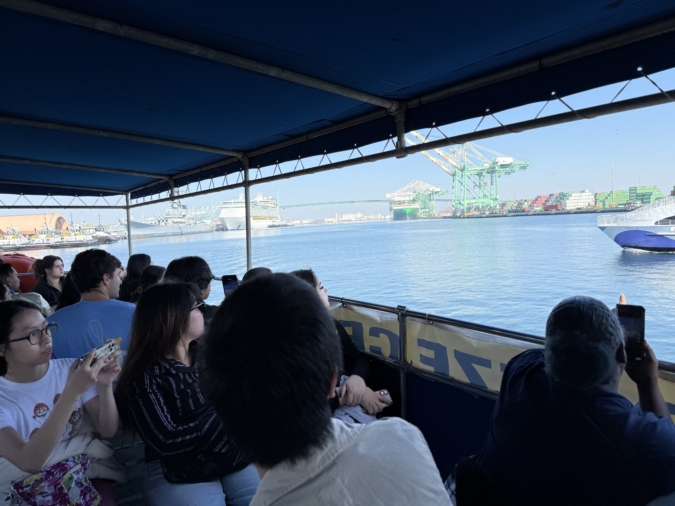
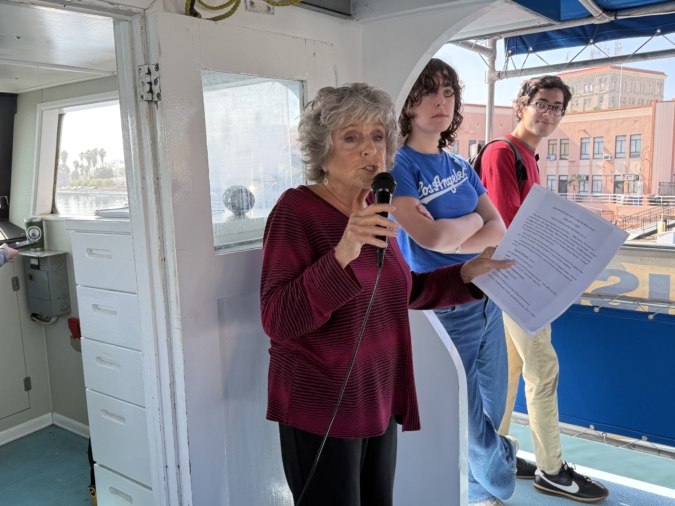
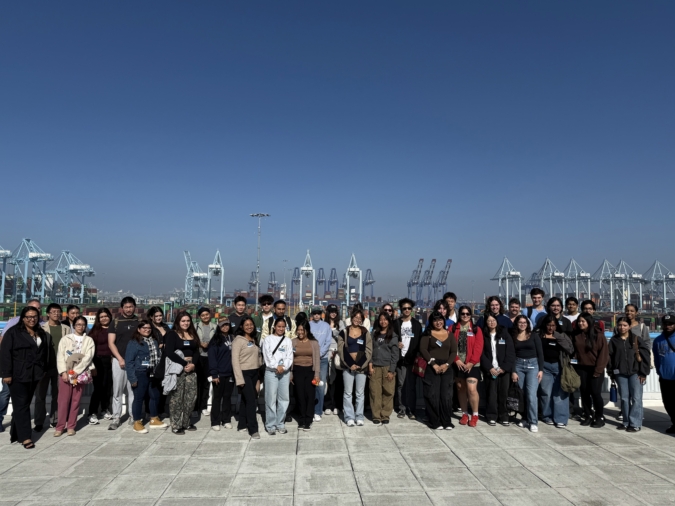
UCLA Labor Studies students craned their necks as they glided past unthinkably large container ships on an exclusive boat tour of the Port of Los Angeles earlier this month. Over the crackling speakers, their tour guide, Diane Middleton, former vice president of the Los Angeles Harbor Commission, explained how the port acts as an economic engine for the nation as well as the local community. The Port of L.A. facilitates millions of imports and exports each year and provides jobs to 1 out of 9 people in the greater Los Angeles region.
While celebrating the port’s impressive scale, Middleton was careful not to omit more challenging details in her narration, including the port’s negative environmental impact on the surrounding low-income communities. Middleton also characterized a recent major labor dispute over automation at the ports in no uncertain terms, stating that automated equipment “stole thousands of jobs from longshoremen.” She recounted how thousands of workers and community members had turned out to protest the staff reductions.
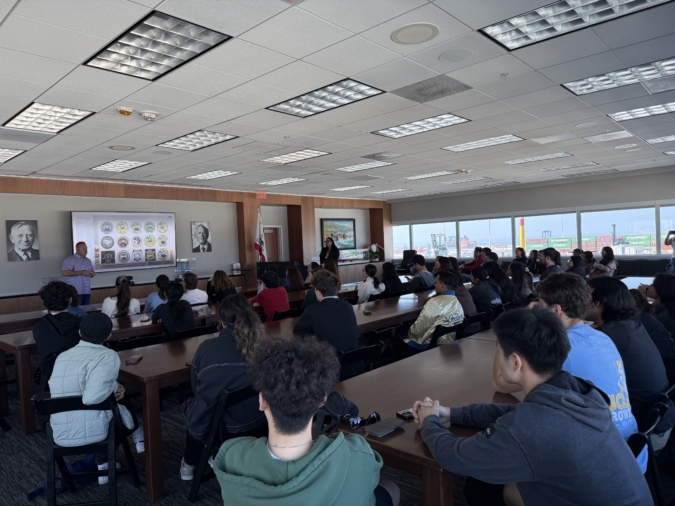
This was a very different perspective than the one offered to the students earlier that morning in the offices of APM Terminal Pier 400. Senior staff of the largest container terminal at the port enthusiastically explained how their automated straddle carriers increased worker safety and overall efficiency while reducing greenhouse gas emissions. They did not mention any protest over the adoption of the technology or layoffs that may have resulted.
Kurt Sulzbach, chief labor relations officer at APM, assured students who raised questions that APM remained the top employer at the port even after implementing automation. Beyond the wrap-around windows of the conference room, the robotic straddle carriers appeared small as they soundlessly transported 20-foot containers along the neat corridors of the terminal.
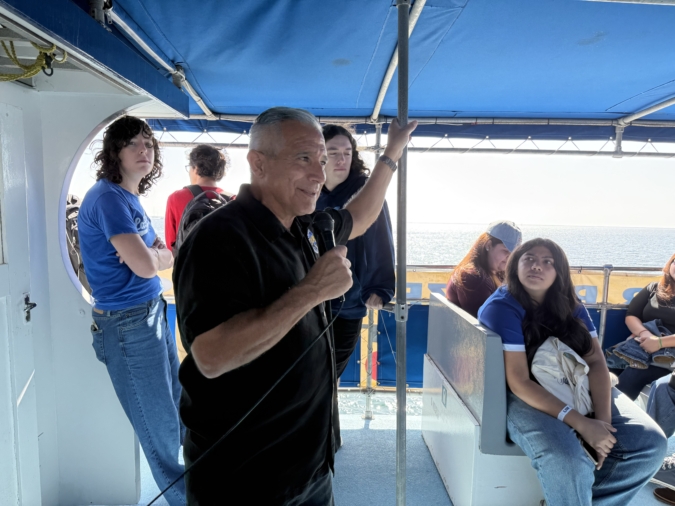
Out on the water, students also heard from an International Longshore and Warehouse Union (ILWU) member, David Serrato, who operates cranes at the port and serves as the union’s senior port liaison. Serrato shared how his involvement in the union has provided stability and a sense of community throughout his career and life growing up in San Pedro. Serrato acknowledged the risks involved with heavy machine operation and the long shifts at the port, but added that the union jobs have desirable pay and benefits.
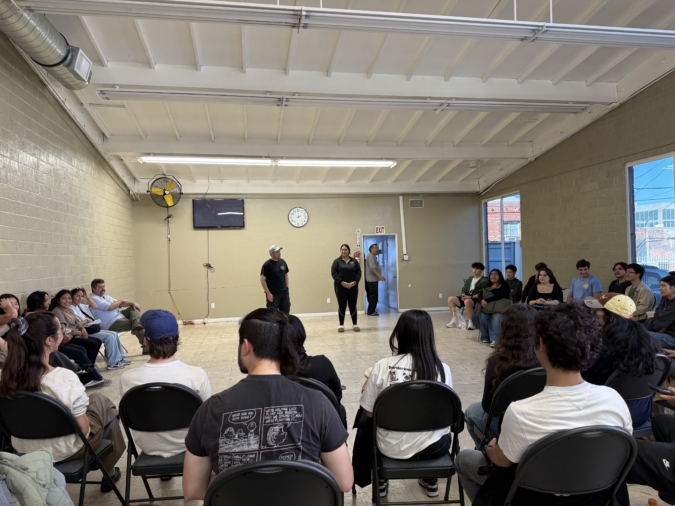
For their last stop of the trip, students walked to a nearby union hall, the home of ILWU Local 56. The president of the local, Albert Ramirez, encouraged students to rearrange their chairs into a semi circle, as they would for a town hall meeting. Then Ramirez elucidated how the local changes lives by securing fair compensation, dignity and community support for workers. Local 56 workers have the difficult, yet essential, task of cleaning environmental hazards at the port and around the nation.
Ramirez explained that the union competes with private contractors who attempt to outsource labor to non-union workers to avoid paying fair wages and adhering to the union’s safety standards. He urged the students to use their labor studies education to launch a career in the labor movement, which, he said, is always in need of more fighters.
Experiential learning with UCLA Labor Studies
The Port of Los Angeles, being a major regional employer and significant contributor to the national economy, provided a macro-scale view of the topics labor studies students study in class. On the field trip, students engaged with a real-world example of how labor intersects with environmental concerns, the rise of new technology and community wellbeing.
The port trip is just one example of the experiential learning opportunities offered by the Department of Labor Studies. Learn more about the Department’s unique, community-engaged major and minor program and newly expanded course offerings here.
The UCLA Department of Labor Studies is the first department of its kind at the University of California. Since its founding in the early 2000s, the academic program has been renowned for its commitment to engaged student learning in community worker settings, rigorous hands-on research and courses that explore urgent labor and social justice issues.