
Power from the Past: Inspiring organizing in the present and future
IRLE’s Memory Work Research Initiative announces the relaunch of its labor history website, with new features and refreshed content
Willa Needham | April 1, 2026
This week, the Memory Work Research Initiative (MWRI), a project of the UCLA Institute for Research on Labor and Employment (IRLE), relaunched its website documenting labor history in Los Angeles.
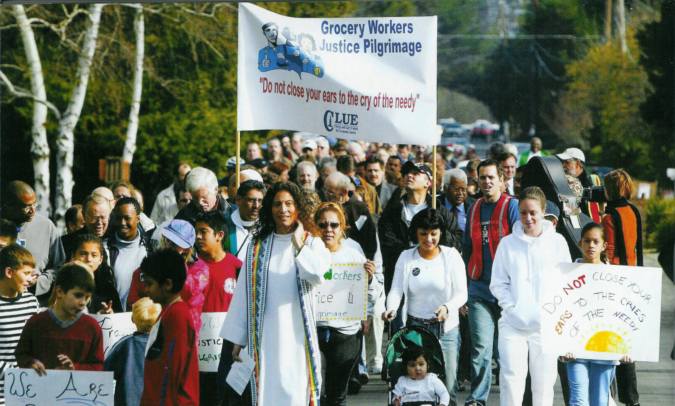
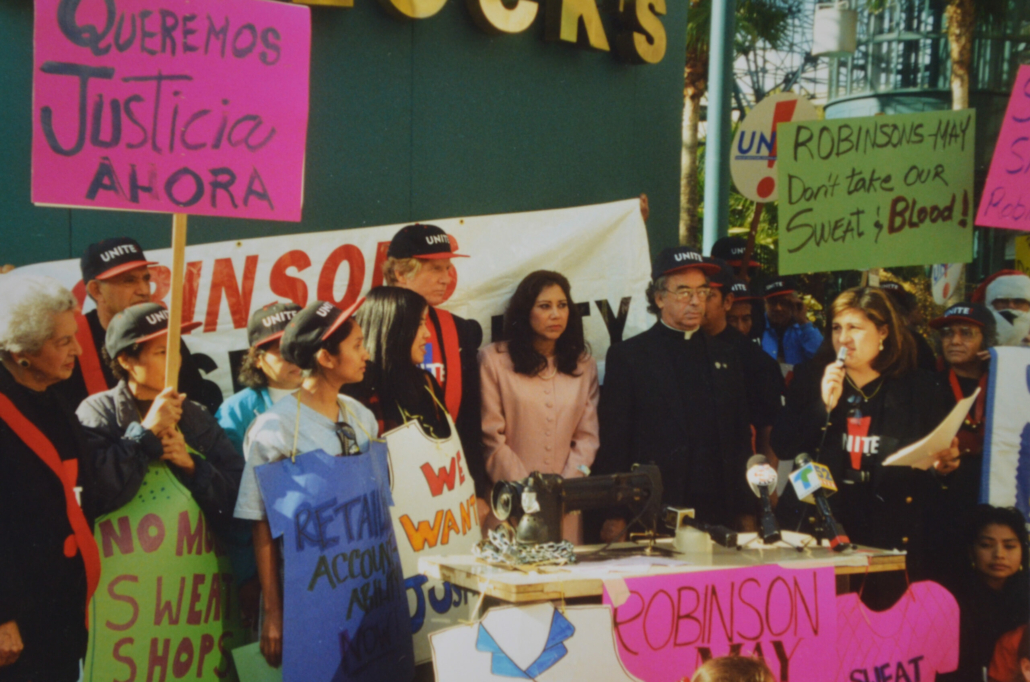
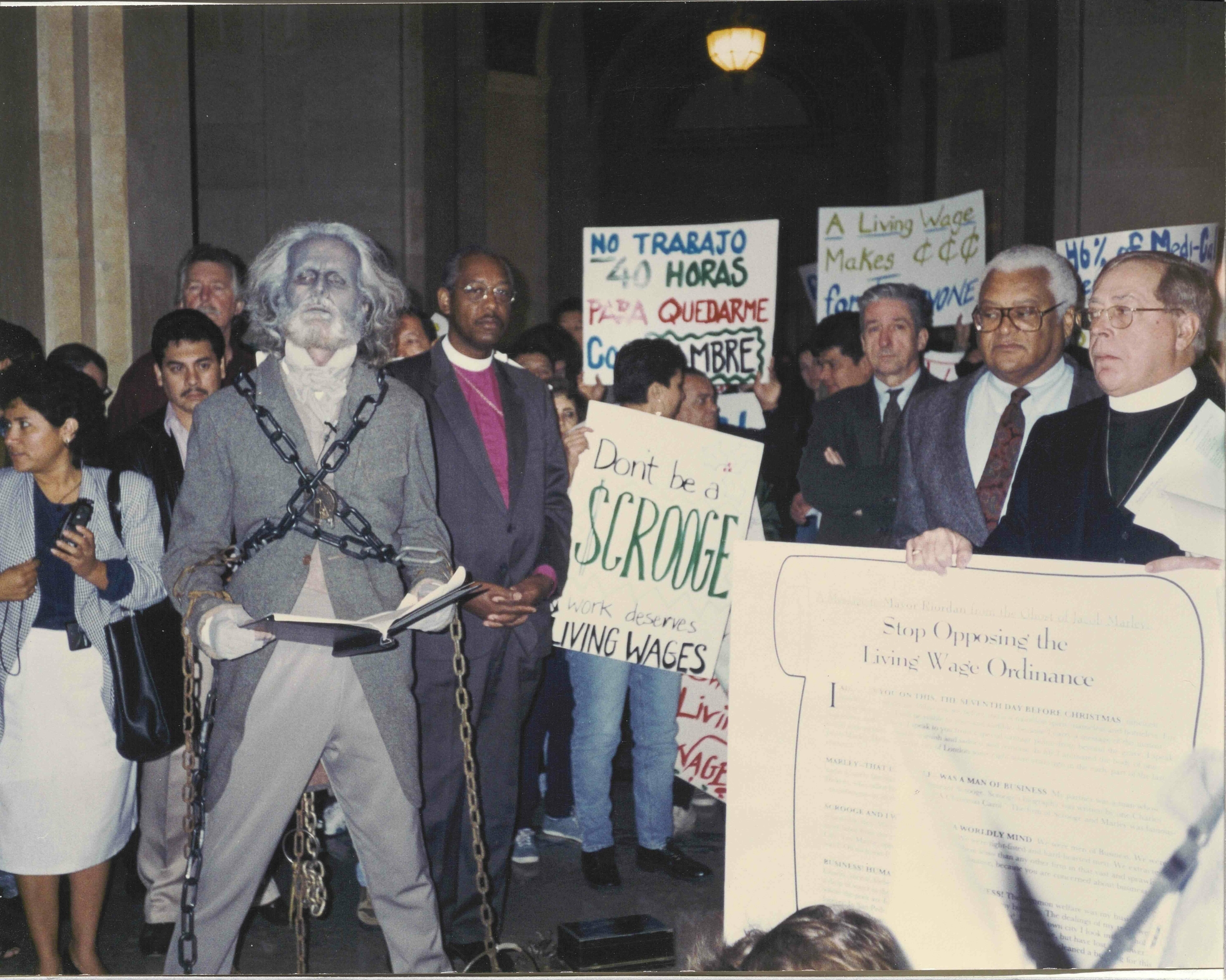
The website is a digital repository of photographs, videos, documents and memories highlighting historic campaigns to advance worker justice. Gathered in collaboration with community partners, the materials featured on the refreshed “Power from the Past” website give visitors an intimate and immersive view of organizing in Los Angeles.
To celebrate the relaunch and learn more about the research initiative, we sat down with the co-founders of the MWRI, Tobias Higbie, IRLE Director, and Caroline Luce, IRLE project director. In the following conversation, Higbie and Luce discuss the website update, the origins of the MWRI and what the content reveals about Los Angeles history. The interview has been edited for length and clarity.
Visit the new Power from the Past website here and learn more about the initiative here.
Q: Tell me about Memory Work’s “Power from the Past” website relaunch. What has been improved and how do you hope users engage with the content?
Higbie: The new website is a refresh and expansion of our previous content. We’ve added more detail, built out timelines and developed toolkits for teachers and community historians. We also tried to make the site easier to navigate by flagging formats and topics so visitors can find exactly what they need.
We hope the content will appeal to different audiences, and we want to meet users at whatever level of interest they might have. It’s certainly for students, and we hope the site inspires them to dive deeper into labor history. But it’s also for those who might not want to do a deep dive.
Organizers are notoriously future-facing and action-oriented. They often don’t have the time or the inclination to sit back and reflect because they have so many pressing concerns. We focus on making history accessible in a digestible format that people can use in many different ways.
The website has rich case studies, but it is also great if you just want to scroll through the photographs and videos, almost like browsing a social media app.
In the past, Memory Work digital content has been used in a variety of ways. We’ve seen photographs and articles picked up and placed in union newsletters or posted to social media. The oral histories series we produced in partnership with UNITE HERE Local 11 was developed into an organizing training program. We are excited to see what kind of projects, research and ideas are generated from our improved website.
Q: What are the origins of the Memory Work Research Initiative (MWRI)? How did you develop your community-oriented research justice approach to archives?
Higbie: I came to Los Angeles in 2007 from Chicago, where I had worked at a research library with a huge wealth of archival collections documenting social movements in the early 20th century. In Los Angeles, there really wasn’t anything similar, especially for the later periods; a lot of local unions sent their materials back east or to the midwest where their national unions are based. That was in the back of my mind when we started this project more than 15 years ago.
The more proximate origin of the MWRI began around 2010 or 2011, when we were approached by a staff member at SEIU Local 1877, now United Service Workers West, for help organizing and cataloging their records. That was how Caroline was drawn into this as a graduate student, spending the summer in the basement of the union hall.
Luce: I started at UCLA in 2006 in the history program. One of my first jobs in graduate school was with the Center for Primary and Research and Training (CFPRT) at UCLA Library Special Collections, which is a brilliant program that pairs graduate students with under-utilized collections relevant to their expertise to teach them the basics of archival processing. Professor Higbie reached out to me about an opportunity to use the skills I had learned in CFPRT at the janitors’ hall.
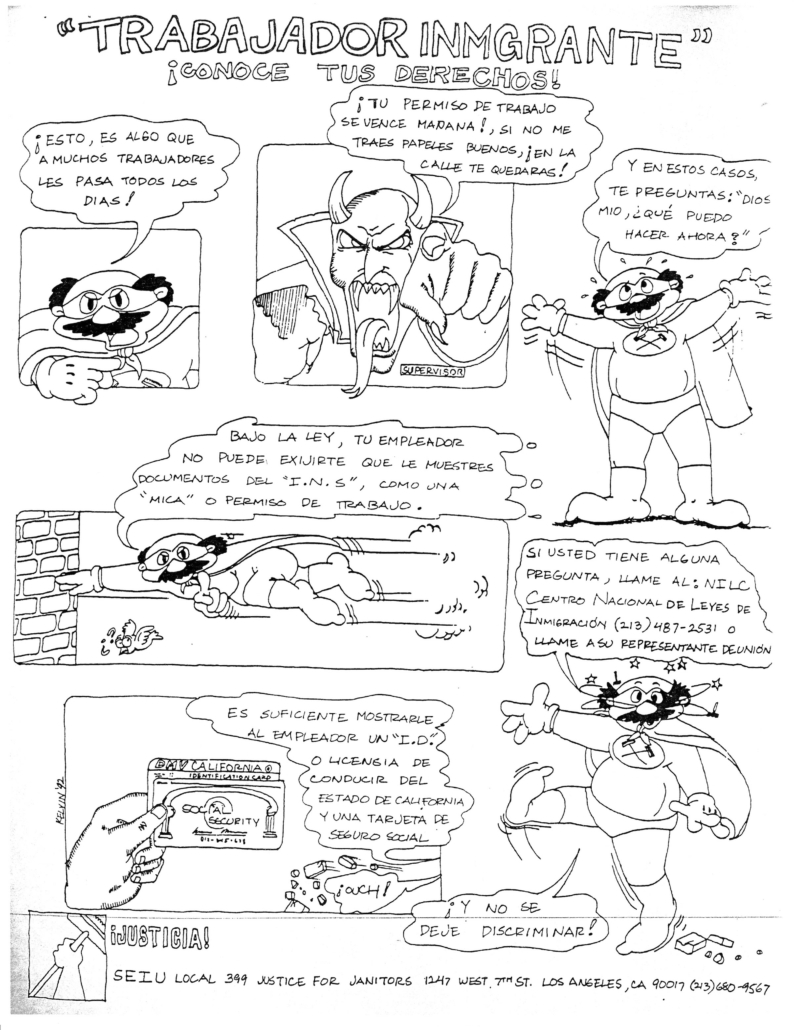
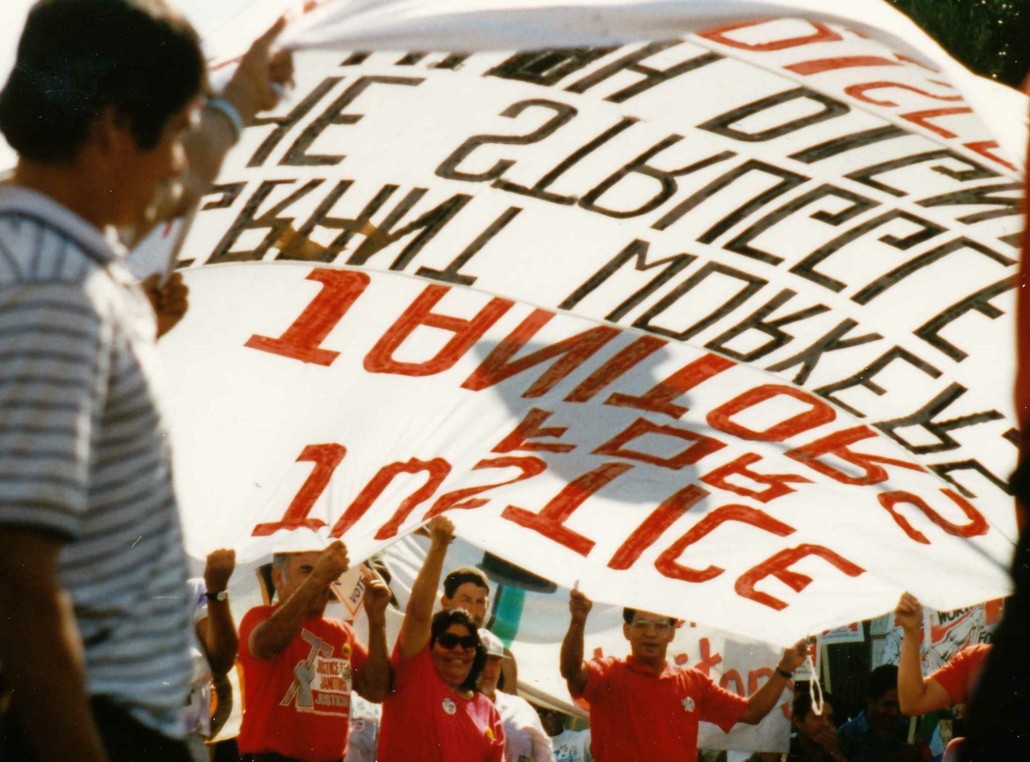
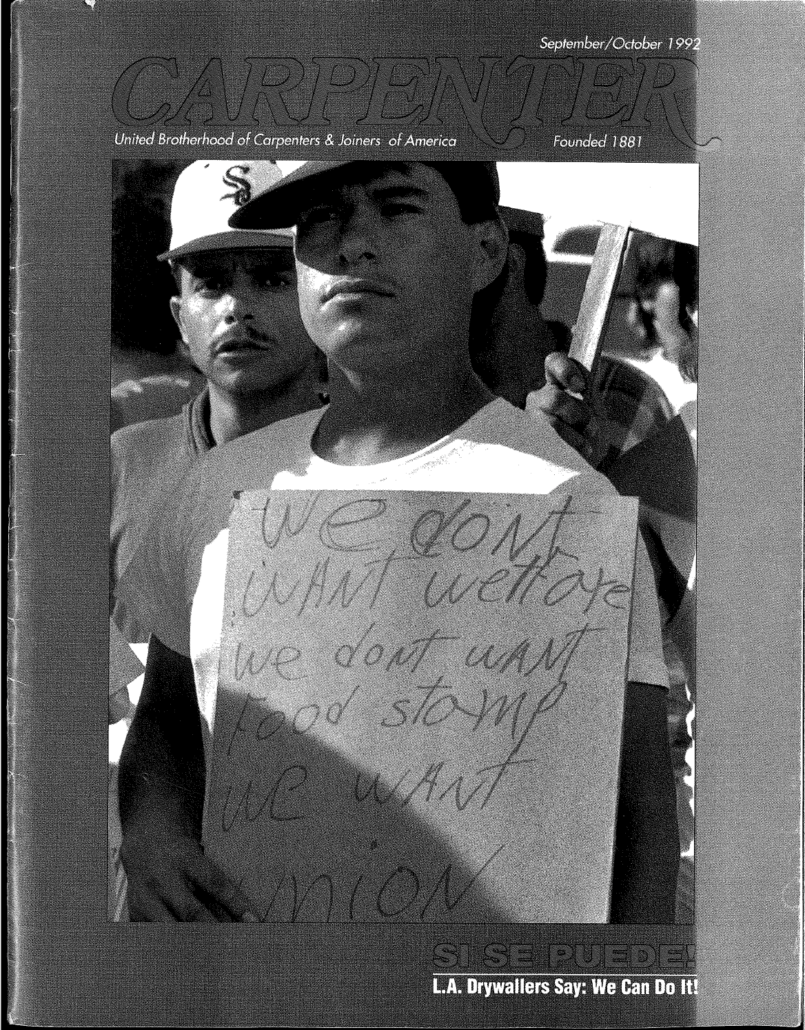
It was more than one summer in that basement. It was very hot, the building was a former mortuary and it was not organized in any way. We spent the first two months just clearing out garbage to even make a workspace there. But in between all that garbage were incredible gems from the Justice for Janitors campaign of the 1980s-2000s.
Our work cataloging the janitors’ records was seminal to the MWRI, though it wasn’t named that then. The experience provided a great example of how archival processing and collection can actually be a form of research.
Professor Higbie and I learned so much about the Justice for Janitors campaign that really, to that point, had not been documented in any kind of formal, scholarly way. We found lesser-known episodes and characters from the campaign, and by hanging around the hall, we built rapport with organizers like David Huerta, who regularly shared his stories with us.
Collaborating with workers and the union helped us hone a research justice approach where we recognize that multiple forms of expertise exist. Workers are experts on their own lives and experiences in history. It is from the raw materials of those experiences and memories that you can build new knowledge in this collaborative way.
“Workers are experts on their own lives and experiences in history. It is from the raw materials of those experiences and memories that you can build new knowledge in this collaborative way.”
– Caroline Luce, MWRI project director
Q: It sounds like collaboration is integral to the research initiative. Tell me more about how partnerships at UCLA have supported this project.
Higbie: This has been a highly collaborative project, not just between us and community organizations, but across the Institute and UCLA. We would never have been able to do the janitor’s project or others without our colleagues at the UCLA Labor Center and Labor Studies, including Gaspar Rivera-Salgado, Virginia Espino and Janna Shadduck-Hernández.
The deep, trusting relationships the Labor Center has built with community organizations opened the door for this kind of engaged work. We were also fortunate to have wonderful community partners like Vivian Rothstein who had the vision to preserve the records of UNITE HERE Local 11, LAANE and CLUE, and anchored the Local 11 oral history project.
Luce: We have also received incredible support from UCLA Library, which is always eager to document local history. Despite staffing and capacity limitations, the resources they have provided throughout our collaboration have been really outstanding.
The success of this project depends on ongoing collaboration. That’s part of the title as well–“Memory Work” recognizes that it is, in fact, labor to do this work. It takes resources, dedication and talent. Memory Work honors that remembering is labor in itself, and therefore deserving of dignity and respect.
Q: Why is Los Angeles a unique setting for this project? What does the MWRI reveal about L.A. labor history that might otherwise be overlooked?
Luce: First, as Professor Higbie alluded to before, labor archives are concentrated in the northeast and midwest. As a graduate student studying Los Angeles, I had to get multiple grants to travel to where all the material was.
In order to shatter the paradigm of archives as elite spaces that solely serve academics, you have to take a number of approaches. One is to facilitate access, which we accomplish through publication on our website and community events. Another factor to consider is simply physical location. The MWRI is part of our effort to build a thriving labor history repository here in Los Angeles and to bring those materials back to working people.
Higbie: Having the collections close at hand means we can discover overlooked stories and people of L.A. labor history. For example, we highlight the impact of Latino and female leaders in the movement much earlier than is often appreciated. It matters that this is a longer story because winning life-changing contracts or healthcare takes decades of concerted organizing. All of these campaigns–some successful, others not so much–build a distributed capacity to organize by widening the network of people who understand how a campaign works.
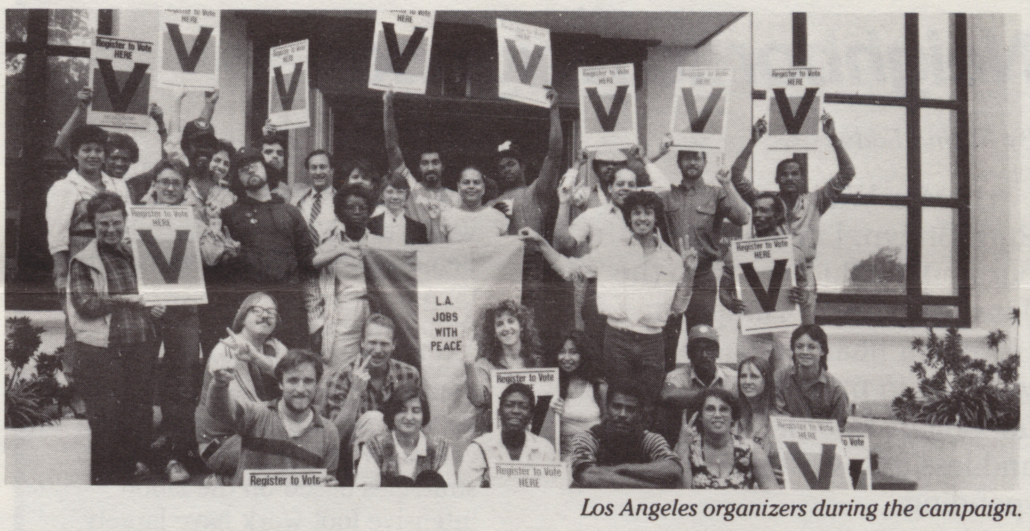
Luce: I find tremendous value in digging through campaigns that some would consider failures. When you show students pictures from the 1980s Jobs with Peace campaign with organizers holding up signs saying “Jobs not Jails,” it blows their minds because they realize people have been doing this for 40 years. You can learn incredible lessons from campaigns that didn’t achieve their stated goals.
Our role isn’t to make a moral judgment on which stories are worth remembering, but to challenge the community to see that there are thousands of stories that offer meaning and resonance.
Q: How does the MWRI advance UCLA’s mission of deepening engagement with Los Angeles?
Luce: Alongside our digital collections, we strive to activate the archives through a series of community events. We take inspiration from the crowd-sourcing model of public memory projects like “Shades of L.A.” and “Power of Place.”
Professor Higbie and I bring scholarly knowledge of the labor movement, as well as real-world knowledge from our involvement in our own unions. Our experiences help us consider ways to acknowledge and honor history that are action-oriented for organizers.
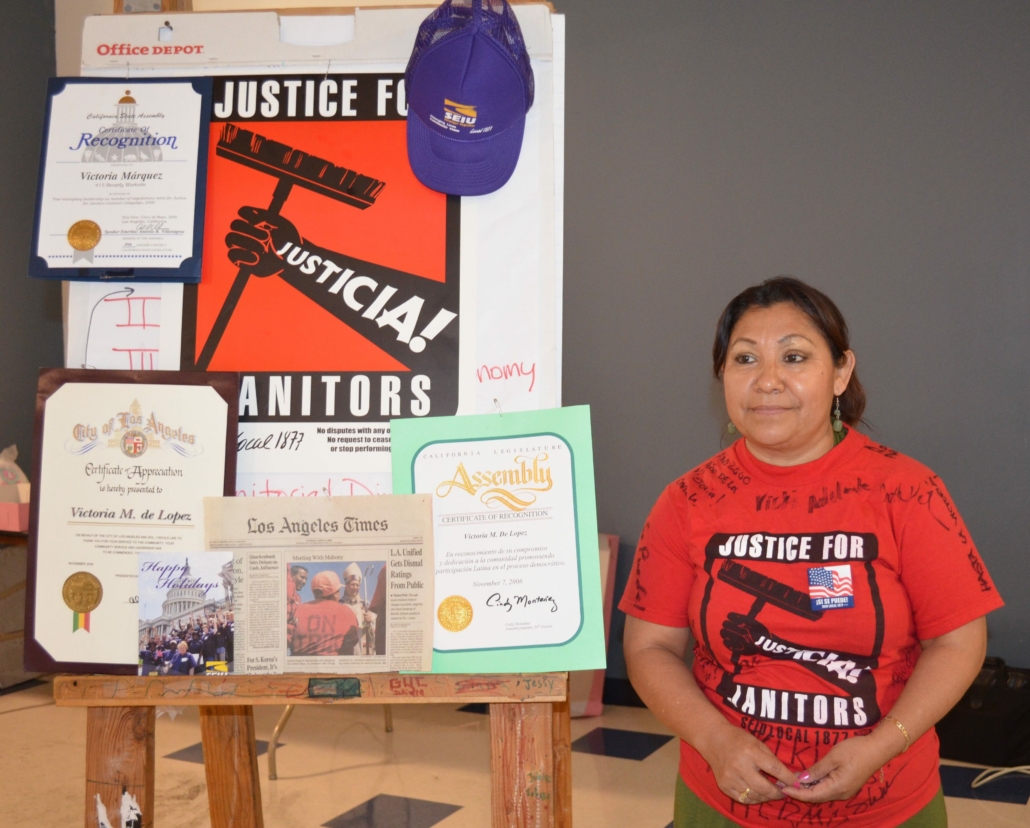
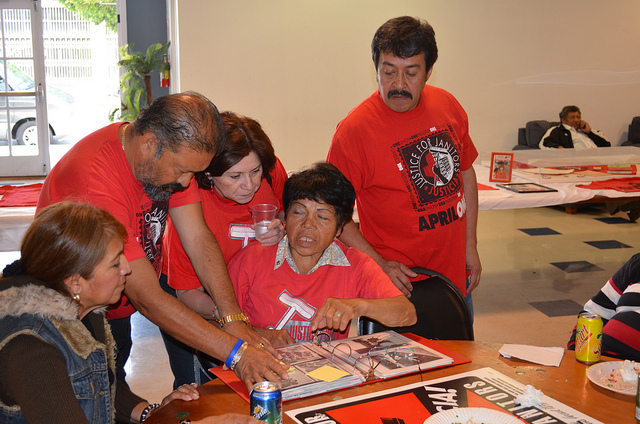
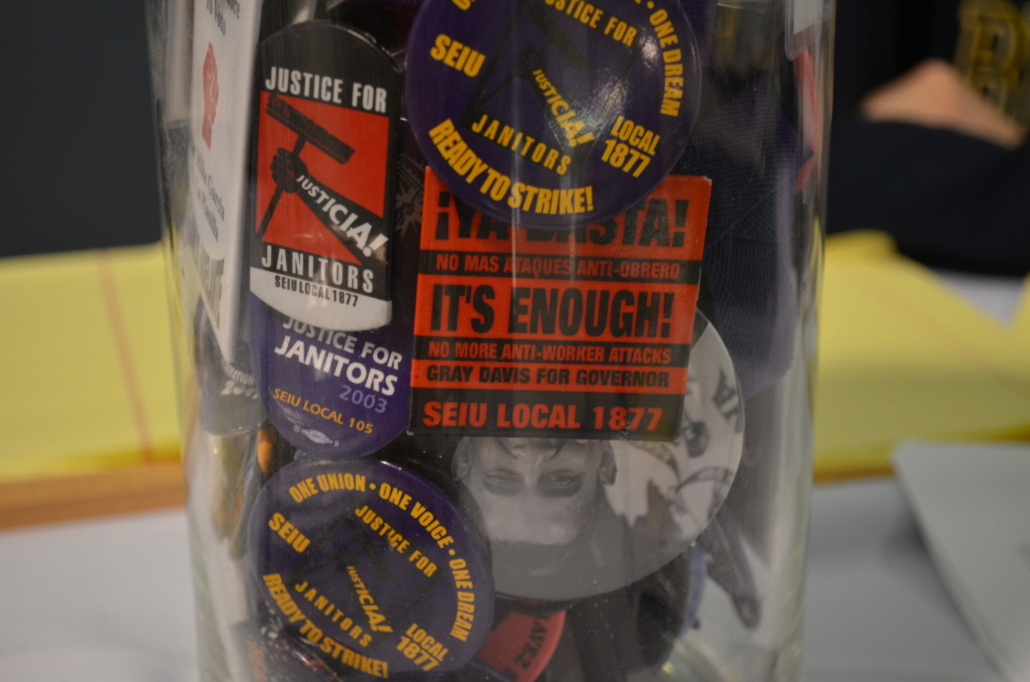
In 2011, we hosted Justice for Janitors History Day, which really signaled the worth of the collective model we developed. A worker named Victoria Marquez brought a whole container of pins and T-shirts from her time as a strike leader. It was magical to see people view themselves as holders and sharers of memory.
Our project is animated by a desire to create inclusive, collective modes of remembrance that reflect a range of experiences. Often the labor movement lifts up icons like Eugene Debs or Cesar Chavez, which can obscure the reality that it takes hundreds of thousands of people to build a social justice movement.
Q: What can we expect from the MWRI in the months ahead?
Higbie: In the coming months, we’ll be uplifting IRLE history as we prepare to celebrate our 80th anniversary. You can also look out for highlights from our new website as part of the “Power From the Past” series in our weekly labor newsletter and on Instagram and Bluesky.
The slogan “Power From the Past” really encapsulates what we are trying to accomplish through the Memory Work Research Initiative. We hope our refreshed website brings out stories from the past that inspire activists, students, researchers and workers to organize in the present and future.
The Memory Work Research Initiative (MWRI) engages community partners, activists, scholars and students in a thoughtful process of collecting, preserving and sharing the rich history of organizing in Southern California. The MWRI strives to establish collaborative modes of remembrance grounded in the IRLE’s commitment to advancing quality education and employment for all.