
UCLA Labor Center welcomes the community home as it celebrates historic building reopening
Learn more about the UCLA Labor Center’s impactful research and educational initiatives advancing worker justice in the heart of Los Angeles
UCLA IRLE | May 6, 2026
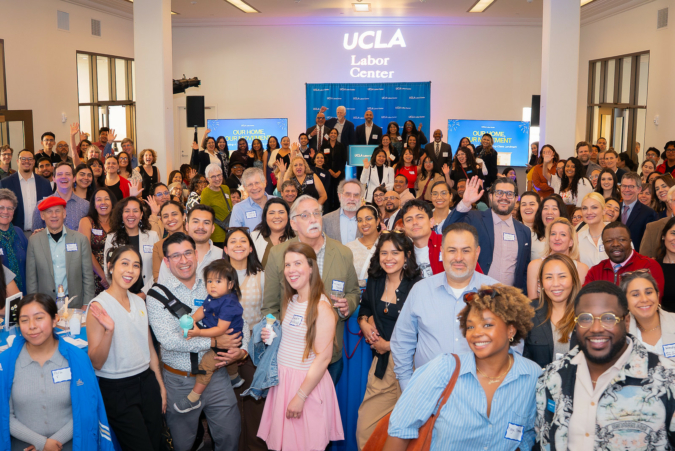
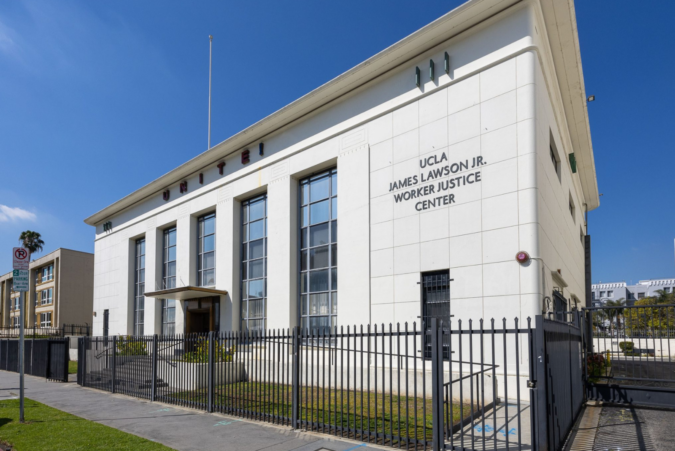
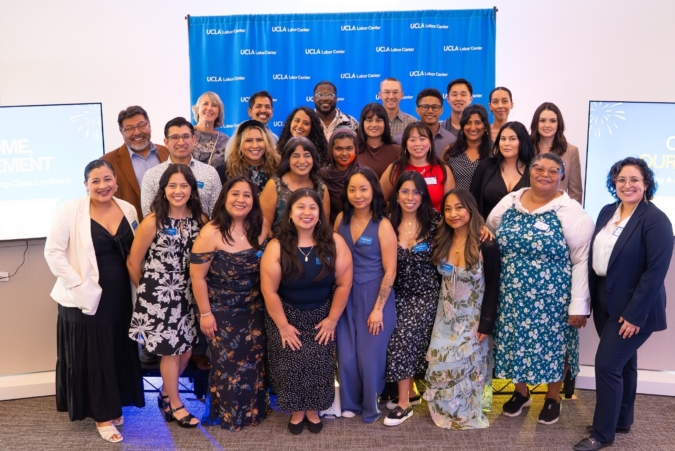
On April 23, the UCLA Labor Center celebrated reopening its historic building in MacArthur Park as a nexus of community, organizing and worker education. But its “homecoming” open house was only a ceremonial nod to what’s already been in motion. Since remodel construction finished late last year, the James Lawson Jr. Worker Justice Center has been buzzing with staff and community partners advancing worker justice in the heart of Los Angeles.
As the UCLA Institute for Research on Labor and Employment (IRLE) prepares for its 80th anniversary in Fall 2026, we’re highlighting the inspiring, community-engaged work of our units, starting with the UCLA Labor Center. The IRLE’s 80th feature series spotlights the contributions of our dedicated staff, affiliated students and community partners, who work together to execute innovative research agendas, education initiatives and outreach programs that meaningfully improve conditions for all working people.
At work in the community
The UCLA Labor Center is a hub of research and education programs that lift industry standards, create jobs that benefit communities and strengthen immigrant rights. Informed by its core values of economic equity, racial and immigrant justice and worker solidarity, the UCLA Labor Center brings together workers, students, faculty and policymakers to address the most critical issues facing working people today.
The reopening of the James Lawson Jr. Worker Justice Center is the culmination of years of campaigning, spearheaded by Kent Wong, former director of the UCLA Labor Center from 1992 to 2023, and Larry Frank, former capital campaign director, both of whom were recognized at the reopening ceremony. Sustained advocacy and appeals to university and state leaders resulted in unprecedented growth and funding at the UCLA Labor Center over the past several years. This has included the development of multiple research and programming teams, the expansion of other labor centers across the UC, as well as the purchase and renovation of the UCLA Labor Center’s historic headquarters.
“Since the renovation, we’ve been able to host meetings, wellness and planning retreats, teach-ins and public talks,” said UCLA Labor Center director Saba Waheed. “Our historic building is first and foremost a community resource—one that has anchored hundreds of critical movement campaigns in decades prior, and one that will continue to anchor all the work to come.”
“Since the renovation, we’ve been able to host meetings, wellness and planning retreats, teach-ins and public talks. Our historic building is first and foremost a community resource—one that has anchored hundreds of critical movement campaigns in decades prior, and one that will continue to anchor all the work to come.”
– Saba Waheed, UCLA Labor Center director
More than 60 years of worker justice
The UCLA Labor Center was founded in 1964 in response to a demand from the California labor movement. Previously known as the Center for Labor Research and Education, it was established by a statewide joint labor-university committee. In the 60 years since, the UCLA Labor Center has strengthened innovative worker empowerment and popular education programs and promoted student leadership opportunities in economic justice career paths.
The UCLA Labor Center is now considered a national model for community-centered research and education that uplifts those who have been historically marginalized within the workforce, including immigrants, women, people of color and LGBTQ+ workers.
“I’m proud of the work we’ve been able to do at the UCLA Labor Center: collaborating with more than 128 community partners to support rapid response needs, providing timely research and continuing to bring young leaders into our movement,” Waheed said. “Through it all, I am reminded that in dire times, it is community action that moves us forward.”
Impactful research and education programs
The UCLA Labor Center prioritizes a research justice framework that centers the lived experience of everyday people and informs policies on the local, state and national levels. Its research projects dive into working-class realities and recognize community expertise as a tool for change, challenging the traditional power structures that limit industries and research alike. The UCLA Labor Center currently has 25 active research projects, covering topics such as public transit, workforce development and wage theft.
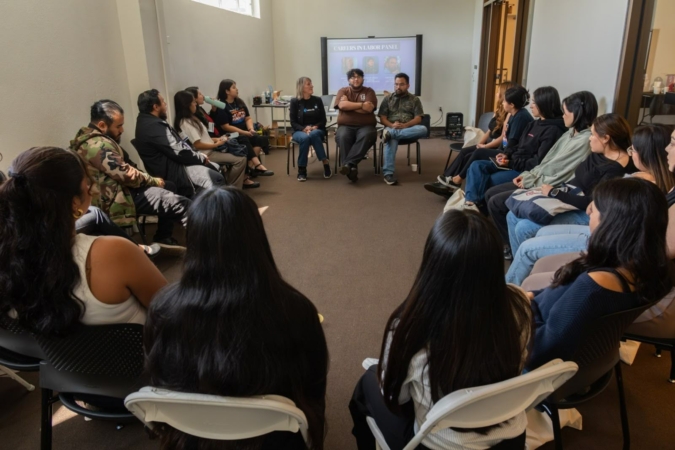
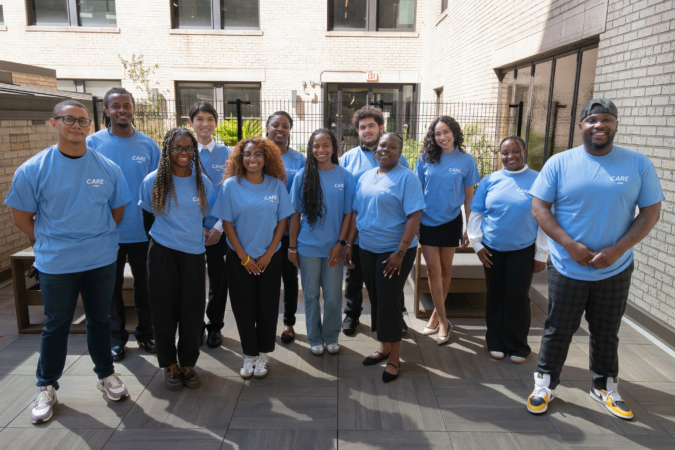
In 2026, the UCLA Labor Center continues to expand access to quality education through its various paid fellowship programs, community engagement initiatives and innovative curricula: Dream Summer, Labor Summer, the Freedom Fellowship, the Young Worker Initiative and more. The UCLA Labor Center’s school-to-movement pathways prepare students across California to become the next generation of labor movement leaders.
Engagement on a global, local and personal scale
The UCLA Labor Center advances UCLA’s strategic mission through its wide-ranging initiatives, simultaneously positioning UCLA as a global university and a driver of positive change in the Los Angeles community. The following sections break down the UCLA Labor Center’s impact at scale through the lens of three of its research, education and outreach programs.
Global university: Hosting international U.S.-Mexico labor convenings
The UCLA Labor Center’s Global Solidarity project brings together union leaders and workers across borders to engage in strategic conversations that elevate community members as leaders. Last year, the Global Solidarity project convened 250 experts, advocates and frontline workers in Visalia, California to discuss the unfair treatment of Indigenous farmworkers who play an essential role in sustaining the state’s agricultural industry. The project is guided by the core belief that in a global economy, unions and workers must join forces to improve wages and working conditions for all.
Community leadership: Providing strategic expertise and technical assistance to California coalitions
Since the founding of the Los Angeles Worker Center Network in 2016, the UCLA Labor Center has served on its steering committee, providing strategy, policy research, communications support and technical assistance to community partners. The center leverages its connections with state and local agencies to develop evidence-based programs that strengthen worker protections and rights. Last year, the UCLA Labor Center also became one of three UC labor centers to lend technical assistance to 89 organizations statewide with grants from the California Department of Industrial Relations (DIR) for worker outreach and education under the California Worker Outreach Project (CWOP). The UCLA Labor Center supports coalitions of grantees in Los Angeles and Orange County, San Diego and Imperial Valley and the SoCal Black Worker Hub.
Narrative change: Telling the personal stories of workers
The UCLA Labor Center’s Re:Work Podcast elevates stories of work and activism to humanize and break down economic and racial justice issues while challenging problematic dominant narratives. Last year, Re:Work released seven episodes centered on key workers’ rights and immigration challenges that aired on over 150 radio stations across the U.S. and internationally.
Re:Work productions include a two-part series created in partnership with Código Doméstico, a research project and podcast aimed at exposing work conditions for women hired as cleaners through digital apps in Central and South America. Re:Work is currently releasing a three-part series on women breaking barriers in the trade industry in India in partnership with Empowering Communities Through Education (ECTE) based in Chennai, India.
Closer look: High Road Training Partnership (HRTP) Fund with the Los Angeles County Department of Economic Opportunity (DEO)
The UCLA Labor Center’s leadership in supporting worker justice in Los Angeles is illustrated through its continued partnership with the Los Angeles County Department of Economic Opportunity (DEO) to launch the $17.8 million High Road Training Partnership (HRTP) Fund.
The HRTP Fund is an industry-informed workforce development initiative that empowers local employers to establish High Road Training Partnerships, which are workforce development programs focused on creating quality, “high-road,” jobs for communities impacted by economic and racial inequities. The HRTP Fund is ultimately creating jobs with livable wages and advancement opportunities for over 1,800 LA County residents.
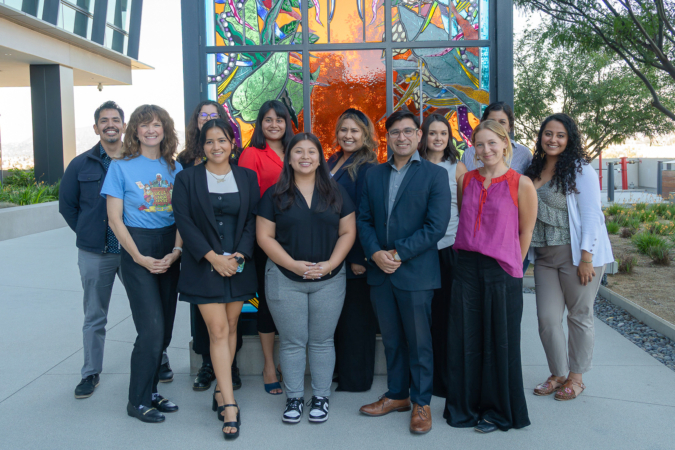
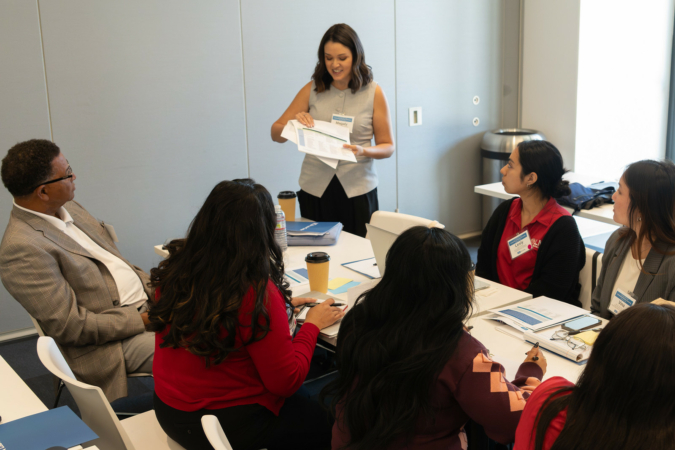
UCLA Labor Center staff are providing hands-on support to 20 grant awardees, assisting their adoption of the HRTP approach by identifying and addressing sector challenges like new technologies and high retirement rates. The team is also conducting an innovative evaluation of the initiative that expands beyond traditional workforce development metrics.
This project is the result of a multi-year framework built by the UCLA Labor Center’s POWER in Workforce Development team, which was first launched in 2019. POWER specializes in studying and supporting efforts that institutionalize high-road solutions to addressing the systemic barriers that limit economic equity for the most marginalized communities in California.
Magaly López, associate director for POWER in Workforce Development, said, “The HRTP initiative offers a transformative vision for the future of work by fostering worker-centered industry partnerships that prioritize job quality, equity and climate resilience. By continuing to align workforce training with high-road standards, HRTP has the potential to uplift thousands more workers, ensuring access to family-sustaining jobs and building stronger, more resilient regional economies.”
An enduring commitment to worker education and economic justice
As the IRLE reflects on 80 years of advancing labor research and education for economic justice, we are looking ahead to our future decades of impact. The UCLA Labor Center is set to continue its innovative educational and outreach initiatives, producing transformative policy-shifting research, developing the next generation of movement leaders and supporting Los Angeles community partners. The reopening of the James Lawson Jr. Worker Justice Center brings forth a new era of worker engagement, education and research for economic justice in the heart of Los Angeles.
The UCLA Institute for Research on Labor and Employment (IRLE) advances labor research and education for workplace justice. Through the work of its units – the UCLA Labor Center, the Labor Occupational Safety and Health program (LOSH), the Human Resources Roundtable, and its academic program, UCLA Labor Studies – the Institute forms wide-ranging research agendas that carry UCLA into the Los Angeles community and beyond.