
Alumni Q&A: Spotlight on Dr. Jennifer Cárcamo
A first-generation scholar and filmmaker reflects on her journey, research, and advice for Labor Studies students.
Marcos Ruiz-Rojas | December 12, 2025
The UCLA Labor Studies Alumni Q&A series highlights the journeys, lessons and accomplishments of our graduates as they continue to shape their fields and communities beyond UCLA.
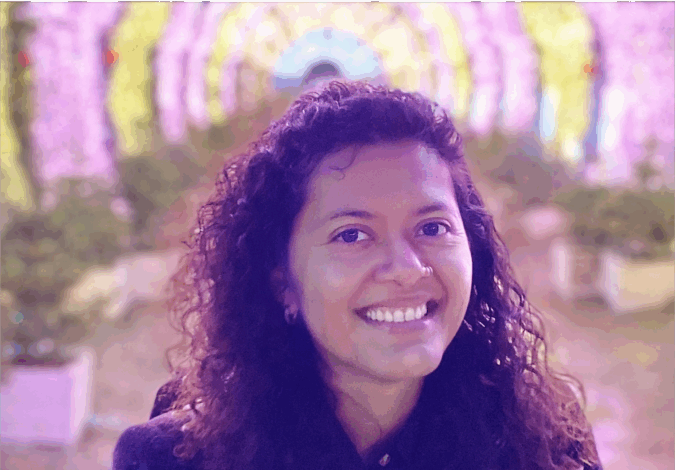
In this edition, we are excited to feature Dr. Jennifer A. Cárcamo, a first-generation scholar, filmmaker and historian whose work centers the social movement history of Central America and its diaspora. Born and raised in Los Angeles to migrants who fled El Salvador’s civil war, Cárcamo has dedicated her scholarship and filmmaking to uplifting the stories of Central American communities across race, class, gender, and sexuality.
This year, we had the honor of welcoming Cárcamo back to campus for our Labor Studies Now series, where she gave a film talk on her documentary work and delivered a research presentation based on a chapter from her forthcoming book.
Cárcamo is currently a UC President’s and Andrew Mellon Postdoctoral Fellow in the Department of Chicano/Latino Studies at UC Irvine, where she is developing “Historias Prohibidas del Istmo: Central American Communists during the Rise of Twentieth Century Fascism, 1920 to 1940.”
Her research traces the origins of Central America’s first communist parties and examines their transnational anti-fascist organizing, including the key roles of women and Afroindigenous communities. She has conducted archival research in Cuba, Mexico, Russia, El Salvador, Guatemala and Costa Rica, and her work has been published in Latin American Law Review, Anuario de Estudios Centroamericanos, Feminist Formations and Race and Class.
We are honored to share her story, lessons and advice in this Q&A.
What brought you to UCLA Labor Studies, and what shaped your interest in labor justice, migration and storytelling?
I started UCLA in 2008, when Labor Studies was still a new minor. I got introduced through a GE Cluster and fell in love with the three-course series. My first class, co-taught by Gaspar Rivera Salgado, Toby Higbie and Kelly Lytle Hernández, focused on US labor history. It was reading-heavy but exciting, and it inspired me to get involved on campus through clubs, organizations, May Day marches and internships with labor unions. I realized Labor Studies was not just about learning history but actively contributing to it.
My interest in migration comes from seeing the connection between labor and immigrant rights. Many workers in the labor movement are migrants, and I come from a migrant/refugee family. My parents came from El Salvador during the civil war and I was the firstborn in the US. That personal and community history, combined with what I learned in Labor Studies, influenced my decision to pursue a PhD in Latin American history, focusing on Central Americans both in the US and in their home countries.
How did your student experience influence your career, and what classes or professors stood out?
The GE Cluster connected me to Gaspar Rivera Salgado, my first mentor, who guided my early research and connected me with other scholars focused on Central America. I also took Dr. Leisy Abrego’s classes on Central Americans in the US and gender and labor. Those classes let me explore labor, student organizing and migration in ways that connected to my own life.
I wrote a research paper on the California Domestic Workers campaign and student support for the Domestic Workers Bill of Rights. This work drew on my grandma’s experience as a domestic worker and will be published in a book on Central American women’s testimonies with Karina Alma and Ester Hernandez. My interests have broadened, but community organizing is always at the center. Labor Studies shaped that analysis from the start.
Why filmmaking for labor and immigrant rights, and how does storytelling shape understanding?
I initially thought I’d go into journalism, but UCLA programs such as the McNair Summer Scholars Program introduced me to academic research and advocacy. I pursued a dual master’s in documentary film and history to combine production skills with historical analysis. Working at Daily Bruin TV gave me hands-on experience with cameras and editing, which complemented my academic work.
After graduating, I participated in the Student Leadership Academy at the UCLA Labor Center, working with SEIU ULTCW on the Dignity Campaign and supporting Central American women with TPS applications. That led to four years at CARECEN, organizing with youth and migrants. These experiences showed me how storytelling and media can make labor and migration struggles visible, connect communities and inspire action.
How was it to present to students and faculty after graduating?
I was excited and a little nervous because I had been a student in those lecture halls. Seeing the program grow from a minor to a department took me full circle. It was empowering to see interest in my work and its relevance today. I hope students see the connection between organizing and history, and that they feel inspired to engage actively with the social issues we study.
What advice do you have for current Labor Studies students?
Follow what interests you and explore opportunities in your communities. Most of my opportunities came from being actively involved. Don’t be afraid to try different paths and remember that engaging with your community will open doors and shape your understanding of the issues you care about.
How do you stay grounded while working on heavy topics, and what impact do you hope your work has?
The pandemic taught me the importance of self-care. I did therapy to process trauma from my work and inherited family experiences. Staying active in my community, while also prioritizing rest and family, has helped me stay grounded.
I hope my work inspires people to see history not as the past but as something we actively shape. Organizing and action are central to social change and I hope students and communities feel empowered to continue creating change even in difficult circumstances.
What are you working on now, and what’s next?
My main focus is finishing my book “Historias Prohibidas del Istmo: Central American Communists during the Rise of Twentieth Century Fascism,” which I hope to publish next year. After that, I want to create a companion film for the book that can be used as a teaching aid, as well as continue my digital humanities and second book project, “Estudio y Lucha: A Brief History of the Salvadoran Student Movement in California.” I want to reach younger audiences who engage more with visual media and inspire them to learn more about these histories and struggles.
The UCLA Department of Labor Studies is the first department of its kind at the University of California. Since its founding in the early 2000s, the academic program has been renowned for its commitment to engaged student learning in community worker settings, rigorous hands-on research and courses that explore urgent labor and social justice issues.

 On November 7, UCLA Labor Studies students attended a field trip to the Port of Los Angeles
 UCLA Labor Studies Professor Leisy Abrego (R) joins Jennifer Cárcamo (L), director of "Eternos Indocumentados" for a Q&A session